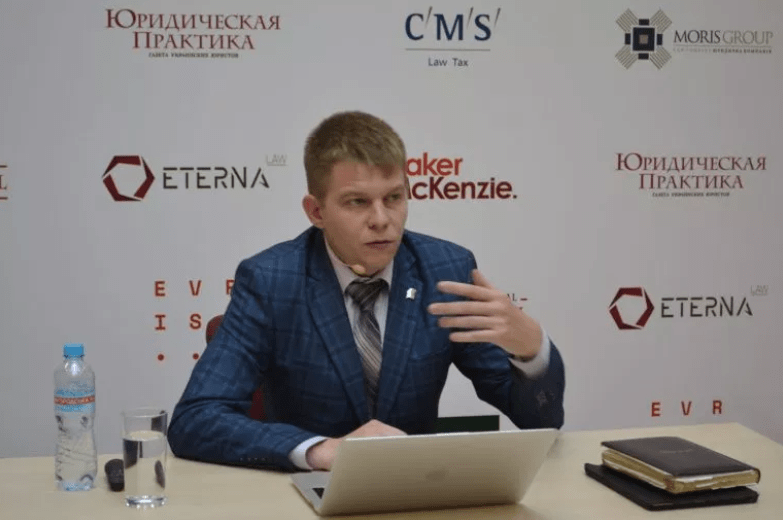
Alexander Shadrin, Attorney at BARRISTERS JSC: "Convictions for serious or particularly serious crimes in trials by default can significantly violate human rights"
The defense strategy for a client who may be subject to proceedings in absentia was the topic of a lecture by Alexander Shadrin, a partner at Barristers JSC.
The speaker drew the audience’s attention to the inconsistency of the conditions for proceedings in absentia with the provisions of the Declaration of the Rights and Freedoms of Man, which could serve as grounds for an appeal to the European Court of Human Rights. In particular, the Convention for the Protection of Human Rights and Fundamental Freedoms emphasizes that every accused person must have the right to defend themselves in person or through a lawyer.
At the same time, a lawyer must have the right to communicate with the defendant and coordinate a defense strategy with him or her; otherwise, doubts arise regarding the lawyer’s ability to provide an effective defense. The accused is also guaranteed the right to a defense and to communicate with their defense counsel. It is unclear how these requirements can be met in proceedings conducted in absentia.
During proceedings in absentia, problems arise with conducting expert examinations: for example, how can the defendant’s voice be compared during such proceedings?
Furthermore, it is not uncommon in Ukraine for defendants to be unaware of the legal proceedings against them and to learn of their conviction in absentia through the media. Another challenge in providing timely notification to the defendant is that some areas lack postal service or internet access.
The lecturer emphasized the need to obtain information regarding the deliberate refusal of suspects in criminal offenses to participate in criminal proceedings in order to enable proceedings in absentia. Recent practices regarding compliance with the Convention in the context of mass interception of telecommunications traffic were also discussed.
During the lecture, Oleksandr Shadrin analyzed global practices regarding proceedings in absentia and the case law of the European Court of Human Rights (ECHR), noting that convictions for serious or particularly serious crimes in proceedings in absentia can significantly violate human rights.
Author: Alexander Shadrin
Source: