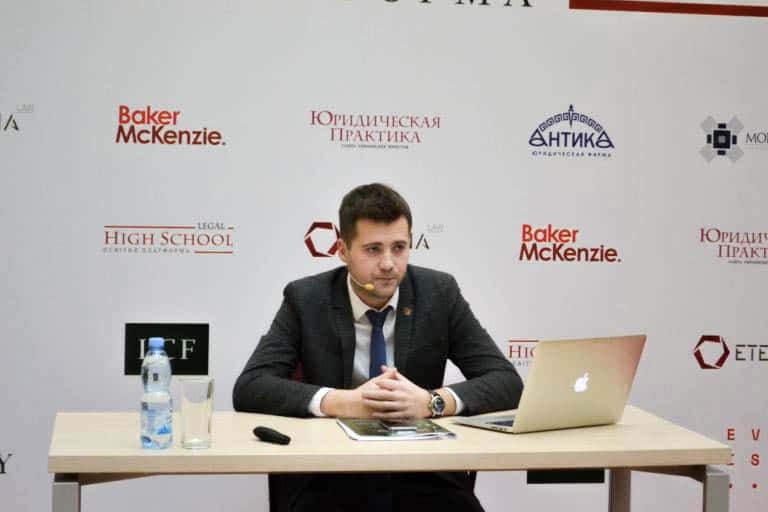
"It is practically impossible to prove 'digital' crimes in our country," says Alexander Tananakin, an attorney at Barristers LLP
Today’s final lecture as part of the “Issues in Qualifying Hackers’ Actions” module within the “Digital Crimes” track at the Legal High School’s School of Criminal Practice is dedicated to the issue of collecting and verifying digital evidence. The lecture was delivered by Alexander Tananakin, an attorney at Barristers Law Firm. The concept of digital evidence first emerged in the United States, where such evidence was termed “non-traditional.”
The lecturer recommends approaching the issue of proof based on the intent behind the crime. New technological systems minimize the possibility of holding perpetrators accountable. For example, to cover up illegal activities, people demand bribes in cryptocurrency. There are also known cases of cryptocurrency extortion. Sometimes criminals fabricate evidence—such as audio and video files—to establish an alibi. “It is practically impossible to prove ‘digital’ crimes in our country. It is impossible to identify the individuals involved in the crime,” emphasized Oleksandr Tananakin. He noted that today’s topic is highly controversial, as there is no established practice yet—it is still taking shape.
Statistics show a relatively high percentage of solved crimes in the area of pornography. But the case becomes more complicated if the defendant does not cooperate with the investigation and refuses to testify. A separate issue is evidence obtained through the video-hosting platform YouTube. “If you’re using YouTube as evidence, I recommend capturing a screenshot of the webpage. There are several private organizations that provide expert opinions on such captures. We have repeatedly used this tool in criminal proceedings,” the lecturer emphasized.
Author: Legal High School
Source: