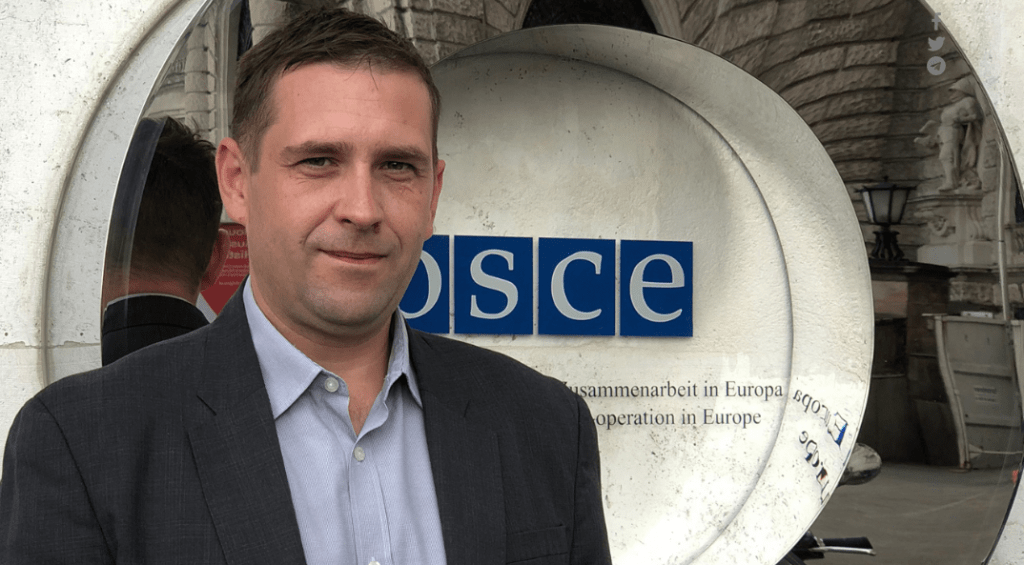
Boris Babin, Legal Advisor at Barristers, LLC: “Yet another fleet we’re losing”
Yet Another Fleet We Are Losing
The recent sinking of the Ukrainian trawler “Ivan Golubets” off the coast of Mauritania following a prolonged fire (unfortunately, with casualties, including Ukrainians) has brought back old thoughts about the lost fleet. In this case, I’m referring to the Ukrainian fishing fleet, which, as it turns out, already has a flag of convenience and offshore registration but is still considered state property. Boris Babin, former head of the Ukrainian Independent Maritime Trade Union and an expert on maritime law and human rights, considers the situation with the four ocean-going trawlers a classic example of the misappropriation of state resources and their ruthless exploitation until they are worn out, rather than privatization. The “MU” editorial team contacted Boris Babin for details, and here is what he had to say:
"This raises a question. We have the State Fisheries Agency, where officials are responsible for regulating fishing vessels flying the Ukrainian flag (registered in Ukraine). In the Black and Azov Seas, we currently have mainly a small fishing fleet that circumvents classification supervision by registries. All that remains of Ukraine’s ocean-going fishing fleet is now sailing under flags of convenience. What exactly are the officials responsible for registering Ukrainian fishing vessels being paid for? De jure, the fleet no longer exists. Let’s just shut this whole operation down, then. After all, if, under the “attentive” leadership of the State Fisheries Agency, state-owned companies have successfully sold off the entire state-owned ocean-going fleet down to the last vessel, and a private owner—assuming, of course, they’re in their right mind—will never turn to these officials to fly the Ukrainian flag on their vessel, the next step for the State Fisheries Agency is very simple. Close the office, hand over the keys to the Cabinet of Ministers, and go home. You have fully accomplished your mission of destroying Ukraine’s ocean-going fishing fleet. Furthermore, our fishing ports are practically inoperable, since the mainland ports (Chornomorsk and Mariupol) have long since ceased to be state-owned, and the Crimean ones (Sevastopol and Kerch) exist only on paper in Kyiv’s offices. When it comes to fishing, we have neither flag management nor port management, and we no longer have a fleet either. And when people talk about four state-owned ocean-going vessels, that’s a very misleading statement. To begin with, this remnant of the ocean-going fleet was registered at Crimean fishing ports until 2014.
Our fleet, but your profits?
Currently, the Russian Federation controls Crimea. And in doing so, it effectively controls the Ukrainian fishing fleet, which—just as it was before the attempted annexation of the peninsula—remains in its fishing grounds: the Eastern Atlantic and the Southern Ocean. However, by 2014, half of these vessels had already been moved offshore, as the owners were state-owned companies, while the shipowners were obscure firms. Even under the occupation, however, the Ukrainian flag remained on the vessels for some time, as Ukraine had bilateral fishing agreements in place, as provided for by maritime law. And Ukrainian vessels enjoyed preferential treatment because we are located far from the fishing grounds. Therefore, the Ukrainian flag was of interest for some time to the managers and beneficiaries who were effectively running this shipping operation. However, this nominally Ukrainian fleet was (and still is) controlled by the Russians—through the Russian Maritime Register of Shipping (RMRS), Crimean captains, and officers. Under these circumstances, the State Fisheries Agency has no choice but to pretend that nothing is happening and to talk about mythical “European and Canadian” charterers, represented by shady individuals with surnames that don’t sound very Canadian. What made this particularly ironic was that Ukraine’s entire ocean-going fleet was of Soviet construction and had been supervised for many years by the RMRF itself. Of course, officials at the State Fisheries Agency could not transfer the vessels to a Ukrainian or independent foreign classification society—after all, that would have greatly upset their Russian partners and sponsors. But in October 2014, amid the Russian aggression, Ukraine revoked the RMRS’s recognition as a legitimate classification society for any vessels flying the Ukrainian flag. Yet the State Fisheries Agency continued, until 2016, to pretend for a long time that nothing was happening and that the RMRS was perfectly suitable for their vessels; Moreover, the State Fisheries Agency did not close its Sevastopol and Kerch marine fishing ports until 2016. When the then “Maritime Administration” (State Maritime Inspection) had closed the Crimean commercial seaports pursuant to an order from the Ministry of Infrastructure of Ukraine, the peninsula’s fishing ports were de jure closed by a resolution of the Cabinet of Ministers only in the spring of 2016. And this happened after a scandal broke when the press revealed that, under the 2014 Ukrainian law on the Crimean Free Economic Zone, Ukrainian companies were actively using these facilities to construct the Kerch Bridge! After all, the bridge required construction materials, including sand extracted using the facilities of the fishing ports, and the port fleet was also utilized. When the press began reporting on all of this—and on the fishing ports as a black hole for smuggling into Crimea—the State Fisheries Agency re-registered these two fishing ports in Kyiv, and once again the issue of ocean-going fishing vessels arose—naturally, as part of the ongoing policy of siphoning off the industry’s last remaining resources into private (and bureaucratic) pockets.
Consequently, the shipowners changed over time.
In 2016, another change in the formal shipowners of these four state-owned vessels took place, which the State Fisheries Agency happily reported, mentioning certain Baltic companies. And shortly after the change in shipowners, these four state-owned vessels changed their flags from Ukrainian to a more convenient one—and the State Fisheries Agency did not joyfully inform anyone about this. This was done for two obvious reasons. First, to ensure that these vessels remained under the supervision of the RMRS, since in 2016 this organization—due to its support of Russian policy in Crimea—was also subject to sanctions by the Ministry of Economic Development of Ukraine. And for officials who, since 2014, have been turning a blind eye to the “antics” of the RMRS on our ocean-going fishing vessels—which are state-owned assets—the matter began to smack of a serious criminal offense. Changing the flag to a “convenient” one allowed shipowners to continue “playing games” with the sanctioned RMRZ and its subsidiaries. On the other hand, Ukraine ratified the International Convention on Standards of Training, Certification, and Watchkeeping for Fishing Vessel Personnel (STCW-F, the “fishing STCW”) long ago, but the vessels began to fall into disrepair, and crews started boarding them with fake Crimean documents. Risks increased here as well, and the ships were quickly transferred to the flags of countries participating in STCW-F.
Who is to blame, and what can we expect from the investigation?
Let me remind you that the sunken vessel was flying the Georgian flag, and the remaining fishing vessels are currently sailing under the flags of Georgia and New Zealand. This allows the owner to maintain friendly relations with the RMRS, which, as experienced seafarers on social media say, not only makes no secret of its accountability to Russian special agencies but will also, for a stack of colorful papers, issue and sign documents for “anyone,” thereby absolving itself of responsibility for compliance with STCW-F. And in doing so, Ukrainian state courts have deliberately shifted the Ukrainian flag’s strict obligations to the vague obligations of some unknown entity. And now the “Ivan Golubets” has sunk. Of course, one could blame the tragedy on the deceased and the crew—and attempts have been made to do just that. We expect nothing else, and, by the way, we are monitoring the situation very closely regarding blackmail and intimidation, as well as attempts to “investigate” this incident. Although it is obvious and indisputable that if the flag had not been changed, if the vessel had been inspected by a legitimate classification society, and if the STCW-F Convention had been in effect on board, the risks would have been an order of magnitude lower. Today, as we see the State Fisheries Agency going through the motions of setting up some sort of inspection commission, and this “commission” consists of employees of that very agency plus several representatives of shipowners controlled by the State Fisheries Agency—including those who have no formal connection to the “Ivan Golubets” at all. We understand that in this format, it is technically easier to conceal the truth than to uncover it. At the same time, investigations are being conducted by Georgia—the flag state—and Mauritania—the country where the incident occurred. The Georgian investigation is unlikely to be thorough, since the flag is convenient for them. And then there’s the question of the formal shipowner, whose representatives are not included in this State Fisheries Commission. These are the direct consequences of what happened in 2016–17—a situation that the State Fisheries leadership treated, at the very least, with negligence. And today, officials there—these “bigwigs”—claim that there was nothing they could do because all the vessels were under bareboat charter and charter agreements. But such contracts aren’t Newton’s third law—they’re simply subject to review, at the very least, at the initiative of the state-owned company. Between 2016 and 2019, they could have written letters many times, held meetings, and determined why the flag of that particular country was chosen for a state-owned asset. Why was the RMRS—a registry subject to Ukrainian sanctions, and since spring 2018, to the most severe sanctions established by two presidential decrees—chosen as the registry for a state-owned asset engaged in foreign economic activity?
And in such a situation, it comes as no surprise that all these years, these vessels—whose actual management is, of course, not based in Canada, but somewhere between Kerch, Kyiv, Kaliningrad, and Rostov—have been recruiting mixed Russian-Ukrainian crews. This included the mass recruitment of fishermen from Crimea, using both genuine Ukrainian and fake “Russian” documents. Moreover, as it turned out following the accident, these vessels were used for practical training by cadets from the “Kerch State Maritime Technical University,” whose activities and very existence neither Ukraine nor the civilized world in general should recognize. Yet the State Fisheries Agency has no qualms about allowing such “cadets” to undergo practical training on vessels that are state property of Ukraine. Moreover, following the sinking of the “Ivan Golubets,” activists obtained publicly available registry records and contracts. It turned out that, according to the RMRD, one of the four Ukrainian state-owned vessels is owned by an offshore company registered in the Seychelles. However, the “bigwigs” at the State Fisheries Agency confidently claim that this vessel belongs to a state-owned company in Kyiv. Evidently, public attention was drawn to the situation at the most inopportune moment, when the vessel had “already almost completely slipped” from Ukraine’s formal control. Presumably, the same fate awaits the remaining two fishing vessels.
Who will compensate the sailors and the state for their losses?
According to the contracts, the lost vessel was under a bareboat charter with a “Canadian company” that is very close to the RMRS. At the same time, this “Canadian company,” just like the “Latvian counterpart” of the Seychelles offshore entity associated with another Ukrainian vessel, calmly purchases ropes from the same businessman in Kaliningrad. This shows that these formal structures are simply a front for “highly respected” individuals. Furthermore, it is important to note what is happening on these vessels. This is because, as photos from the site of the “Ivan Golubets” accident showed, the identifying marks on these vessels—including their IMO numbers—had been painted over. According to press reports, the sunken vessel had turned off its automatic position-reporting system 10 days before it sank. Moreover, it is unclear which company was, even formally, responsible for the search and rescue of this vessel. What was happening on board and what was in the ship’s holds remains a complete mystery. Reports have surfaced on social media claiming that the liferafts, oxygen masks, and fire extinguishers on board were significantly defective. Simply put, there was nothing and no one to put out the fire that broke out. And there’s also a big question: was the vessel’s owner even interested in putting out the fire? Here’s the bottom line. What will happen next to the crew is unknown; it’s unclear whether the rescued fishermen were simply written off, given tickets, and essentially received no compensation at all. Reports circulating in the media suggest that the vessel’s actual owner will attempt to “recover damages” from the fishermen themselves, and these homegrown “Tulka bigwigs” intend to carry out these clearly illegal actions in the style of the 1990s. Overall, we’re facing a difficult situation, but we’ll keep fighting. The labor unions are demanding fair compensation for the deceased and the injured. And we will investigate why Ukrainian officials, without hiding their actions, are aiding the Russian registry in violating sanctions and facilitating Russia’s aggression against Ukraine—and, by accepting forged documents in state courts, are contributing to the loss of lives and the loss of Ukrainian state-owned vessels.
Our Prospects for Ocean Fishing
Ukraine actually has a real opportunity to develop ocean fishing; we have signed agreements with many countries. Any normal country in this situation would open the door to private business. Fly the Ukrainian flag, fish under our quotas, and hire our fishermen. We’re doing the opposite. And those state-owned fishing vessels that are on their last legs are being sold off to line the pockets of officials. The state gets nothing out of this except a paltry few tens of thousands of dollars in lease payments. Yet even in their current condition, these vessels are worth millions, not to mention the income from fishing.
Deep-sea fishing is actually a very profitable business. And we should be developing our ocean-going fleet, but instead, for some reason (though it’s actually clear why), the State Fisheries Agency values only the exploitative agreements with the Russians among all sector-specific international treaties. In February of this year, our “fishing bosses” signed yet another treacherous protocol on fishing in the Azov Sea, which, among other things, handed the Russians the “right” to unilaterally regulate fishing in the Kerch Strait. At the same time, our ocean-going fishing fleet is being destroyed. It seems there is no intention to save Ukraine’s marine fisheries from complete destruction. After all, this is not just a blow to the industry’s economy and the interests of thousands of workers in the sector; it is also a loss of strategic food resources for a country at war. All this is happening amid the complete inaction of all relevant authorities.
Interview by Anatoliy Vengruk and Tetiana Inina
“Sailor of Ukraine,” No. 31, August 7, 2019
Author: A Ukrainian Sailor
Source: