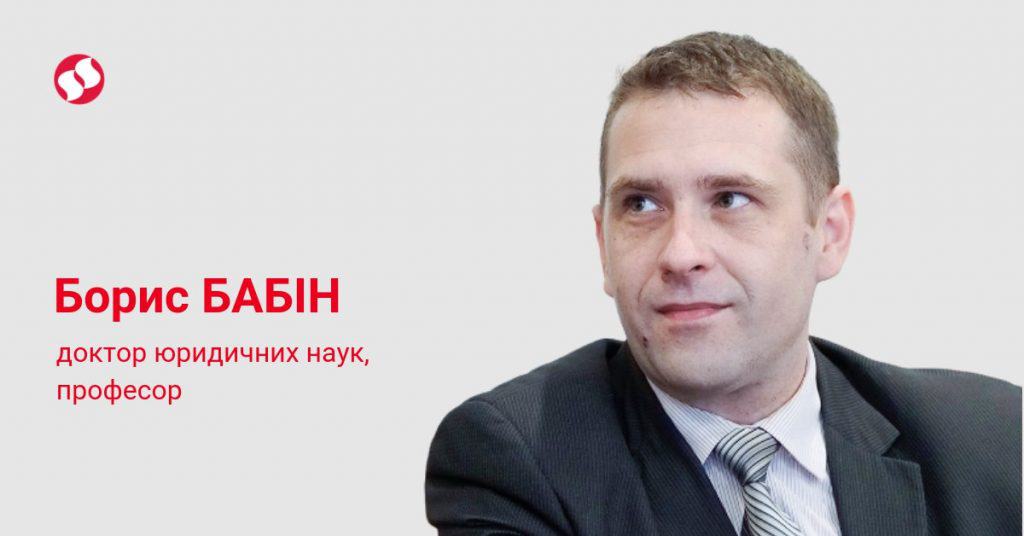
Boris Babin, Legal Advisor at Barristers LLP, on the fifth anniversary of the Minsk Process: “The Minsk Agreements: ‘Without Alternative,’ but Not Binding”
Five years have already passed since the start of the Minsk process and the conclusion of a series of agreements within its framework. Many parties and participants in the negotiations, as well as domestic and foreign leaders, constantly assert that there is no alternative to what was achieved in Minsk. Since the question of various alternatives to Minsk—attempts to counter Russian armed aggression through non-military means—is purely political, it is, by definition, not subject to expert or scientific analysis and should be left to politicians. But sometimes, both from our open enemy and from certain officials and ministries in Kyiv, a completely different argument is put forward—namely, that the Minsk agreements are “legally binding” on Ukraine. And here, setting politics entirely aside, we can very specifically resolve a purely legal question: do the texts signed by certain parties in Minsk and subsequently reflected in a series of international acts and statements actually contain any legal obligations for Ukraine and other subjects of international law?
It is worth recalling that the first document to emerge as part of the Minsk negotiation process on September 5, 2014, was titled “Protocol on the Results of Consultations of the Trilateral Contact Group Regarding Joint Steps Aimed at Implementing the Peace Plan of Ukrainian President P. Poroshenko and the Initiatives of Russian President V. Putin.” Its text began by noting the existence of the Trilateral Contact Group, composed of representatives of Ukraine, the Russian Federation, and the OSCE, which “reached an understanding on the need to take the following steps,” as listed later in the document. Thus, this “Protocol”—regardless of its formal status—amounted to a specific plan (program) of action, albeit without any set deadlines or designated responsible parties, and without specifying any binding requirements. For example, paragraph 8 of the “Protocol” provides for “taking measures to improve the humanitarian situation in Donbas,” but it does not explain which of the signatories—the OSCE, the Russian Federation, or Ukraine, or all of them together—is supposed to do this, and only two paragraphs explicitly provide for specific measures “on the part of the OSCE.”
Next, it is necessary to determine the authority of the members of the Trilateral Working Group regarding the signing of the “Protocol,” and here one must, at a minimum, presume that they possess non-public powers to sign certain texts on behalf of the leaders of the Russian Federation, Ukraine, and the OSCE, respectively. This is because, at the time the protocol was signed, M.Y. Zurabov was the Russian Federation’s ambassador to Ukraine, and he could sign any agreements of this level only if he had a special mandate. At the same time, L.D. Kuchma represented Ukraine in the “Trilateral Contact Group on the Peaceful Settlement of the Situation in the Donetsk and Luhansk Regions” in accordance with Order No. 953/2014-rp of the President of Ukraine, and, publicly speaking, exclusively “for the purpose of implementing the President of Ukraine’s plan for a peaceful settlement of the situation in the Donetsk and Luhansk regions and reaching agreements on its implementation.” Even if Mr. Kuchma had other powers in Minsk besides those specified in this decree, they clearly could not contradict the applicable regulatory act. And, of course, “agreements on implementation” cannot in any way be considered delegated powers to conclude an international treaty. After all, if the 2014 “Protocol” were an international treaty (agreement), then according to its text, it would have to be concluded (negotiated and signed by L.D. Kuchma) on behalf of Ukraine in accordance with the special procedure set forth in Articles 3, 5, and 6 of the 2004 Law of Ukraine “On International Treaties,” for which Order No. 953/2014-rp is clearly insufficient.
The most intriguing paradox here is the role of the OSCE as an international organization and a full-fledged participant in the Trilateral Group, because, first, from the perspective of international law, this structure… does not really exist, since it is not based on any intergovernmental treaty, and second, its participation in the “Protocol” precludes the direct application of the provisions of the 1969 Vienna Convention on the Law of Treaties to this 2014 text, since that Convention does not cover cases involving treaties with international organizations.
However, even if we set aside this casuistry—which is of interest only to scholars—and assume that the OSCE’s status and the role of the Vienna rules on the conclusion of international treaties are “sanctioned” by international custom, any attempt to apply such rules to the 2014 “Protocol” as a “treaty” would still fail. After all, the “Protocol” could only become binding as a “treaty” through its signature if this were expressly provided for in its text (which it is not), or through the authority of the signatories (which is not the case, at least with regard to L.D. Kuchma), or through “an agreement otherwise established by the negotiating states that the signature has such effect” (Art. 12 of the Vienna Convention).
Attention to the moment when the “Protocol” enters into force as a “treaty” for the parties is of fundamental importance, since, as a general rule, if a treaty does not enter into force solely by virtue of its signature, it must be ratified (approved, adopted). But of course, the 2014 “Protocol” has never been ratified (approved, adopted) by anyone—at least not in Ukraine. After all, according to Article 9 of the current 2004 Law “On International Treaties,” if the 2014 “Protocol” were a treaty, it would undoubtedly be subject to ratification, which is carried out exclusively through the adoption of a special law of Ukraine under a specific procedure. There are no other options, because this “Protocol” contained provisions directly related to human rights and provided for the adoption of new Ukrainian laws; treaties with such provisions must be ratified, and there is no other way. Therefore, both in substance and in form, the 2014 Trilateral Group “Protocol” did not acquire any legal force, was not signed by the appropriate officials, and was not—and could not have been—an international treaty (in particular, an international treaty of Ukraine). Under any circumstances, this “Protocol” did not and does not contain legally defined obligations, and it was concluded in direct violation of Ukraine’s domestic regulatory procedures regarding international treaties.
The only format established under international law that can truly be applied to the 2014 “Protocol” is its classification as one of the “special agreements” (English: “special agreements”) concluded during an armed conflict, as mentioned in Article 3 of all four 1949 Geneva Conventions. Such agreements may take any form, primarily between the parties involved in the conflict (for example, Article 15 of the First Geneva Convention refers to “arrangements for an armistice or a suspension of fire, or local arrangements”) (English: “an armistice or a suspension of fire shall be arranged, or local arrangements”). International humanitarian law says nothing about the binding nature of such documents or the procedure for their implementation, which can be ensured solely by reciprocity; the text of the Geneva Conventions implies that such agreements are situational, temporary, and subject to a simplified procedure for their establishment and termination.
However, the Geneva Conventions prohibit the abuse of such agreements to achieve military objectives (i.e., breach of trust). At the same time, the 1949 Conventions and their subsequent protocols say nothing at all about the procedures for such agreements in non-state conflicts, let alone the legal standing of the parties to such conflicts under the relevant agreements. Therefore, the desire of one of the signatories to the Minsk Agreements—namely, the Russian Federation—to treat the conflict they are supposed to resolve as “internal” precludes any discussion of an international legal regime for the documents adopted within the framework of the Trilateral Group. And even in the context of an interstate conflict, the binding nature of such “agreements” especially on issues not directly related to the conduct of hostilities (such as Ukraine’s adoption of laws, the conduct of an “inclusive nationwide dialogue,” etc.), does not arise under international law, including in the context of interstate conflicts.
The next document in the Minsk process was the “Memorandum on the Implementation of the Provisions” of the aforementioned “Protocol,” signed on September 19, 2014. In its preamble, this document explicitly referred to the content of the Minsk documents precisely as “agreements on the bilateral cessation of the use of arms,” that is, it clearly characterized them as agreements under the Geneva Conventions of international humanitarian law, rather than as international treaties. What distinguished the “Memorandum” from the “Protocol” was the mention in its preamble not only of the participants in the Trilateral Group but also of “representatives of certain districts of the Donetsk and Luhansk regions,” as well as its focus on resolving exclusively military issues.
Of course, despite any political declarations, the absence in the “Protocol” of September 5, 2014, and the “Memorandum” of September 19, 2014, of any provisions legally binding on the Russian Federation or Ukraine was evident to the Russian Federation and Western countries from the very beginning. And the subsequent document, signed within the framework of the Trilateral Contact Group on February 12, 2015, titled “A Package of Measures for the Implementation of the Minsk Agreements,” also had similar characteristics in form and content, which, based on the foregoing, its legal binding nature for the parties.
Moreover, the very title of the 2015 document referred to the 2014 “Protocol” and “Memorandum” precisely as “agreements” in the spirit of Geneva law. The “Set of Measures” contained absolutely no mention of the purpose or objectives of its signing, the procedure for its implementation, or anything of the sort. Like the 2014 “Protocol,” The “Set of Measures” took the form of a programmatic act (action plan), most of whose provisions were not specified in terms of who was responsible for implementation, nor regarding the deadlines or procedure for implementation (such ambiguity has, in fact, persisted throughout the five years of the Minsk process). Of course, its sole possible legal status as a “special agreement” between the parties to the conflict did not impose any obligations on Ukraine—for example, regarding constitutional reform (para. 11 of the “Package of Measures”).
Under these circumstances, an attempt was made to provide political and legal backing for the content of the Minsk Agreements (i.e., the 2015 “Package of Measures,” which referred to the 2014 “Protocol” and the “Memorandum” as a means of expanding the “Protocol”) was the Declaration by the President of the Russian Federation, the President of Ukraine, the President of France, and the Chancellor of Germany “in Support of the Package of Measures for the Implementation of the Minsk Agreements” dated February 12, 2015. This document states that the leaders “endorse” the “Package of Measures,” while making no explicit mention of their endorsement of the 2014 “Protocol” or “Memorandum.” Furthermore, the Declaration refers to the “contribution of the leaders to this process” and their use of their own “influence on the relevant parties” to “facilitate the implementation” of the “Package of Measures” (but not other documents of the Minsk process). At the end of the text, in its Russian-language version (this is important), it refers to the leaders’ “commitment to the implementation of the Minsk agreements” and the establishment of a “monitoring mechanism in the ‘Normandy format’” for this purpose.
However, unlike all other acts adopted within the framework of the Trilateral Group, although the Leaders’ Declaration bears a much closer resemblance to an international act, it cannot be considered an international treaty of Ukraine or the Russian Federation. This is because, despite being signed by the authorized heads of state, this document was not ratified by the parties—a step that, based on its content, would have been necessary at a minimum for the Russian Federation and Ukraine. Furthermore, this document was clearly of a framework nature and did not establish any specific requirements for Ukraine or the Russian Federation regarding the implementation of any of the Trilateral Group’s documents.
Again, the programmatic, recommendatory nature of the Declaration, as well as the lack of legal binding force for the Russian Federation and Ukraine—and for the “Minsk Agreements” themselves—was evident from the very beginning. I would add that in modern international relations, there are numerous policy documents, and even when they take the form of treaties, no one yet knows how to address the obligation to implement their provisions. Therefore, in an attempt to provide additional political and legal support for the Minsk process, the Russian Federation initiated a discussion of the text at the UN Security Council. The formal basis for this discussion was a letter submitted by the Russian Federation to the UN Security Council as early as April 13, 2014. (S/2014/264), which, of course, contained—and could not have contained—any mention of either the Minsk Process or its documented outcomes, but referred only to “alarming developments” in Ukraine.
However, convened on the formal basis of this letter from the late Russian Permanent Representative Churkin, the Security Council unanimously adopted Resolution No. S/RES/2202 of February 17, 2015 (2015), which endorsed the “Package of Measures,” called on all parties to ensure its full implementation, and welcomed the Declaration of the four leaders. Typically, it is Security Council Resolution No. 2202 that is cited as the international document that allegedly “endorsed” the Minsk Process documents and supposedly gave them some binding force. At the same time, a simple analysis of the Security Council’s powers, as enshrined in the UN Charter, shows that this is actually far from the case. And here I will not even delve into the interesting but much broader issue of the Russian Federation’s lack of any authority in the UN Security Council and its lack of UN membership status. Nor will I even raise the question of the legality of the Security Council vote on the “Minsk Agreements”—not only by the “illegitimate” Russian Federation, but also by France — as signatory states with a direct interest in the process — and will limit myself exclusively to an analysis of the applicable general provisions of the Charter of the United Nations.
For example, Article 25 of the Charter states that UN members agree to comply with and carry out the “decisions” of the Security Council. However, not every Security Council resolution constitutes a “decision,” and this directly applies to Resolution No. 2202 as well. After all, the UN Security Council’s relevant powers regarding its adoption are explicitly set forth in Chapter VI of the UN Charter, “Peaceful Settlement of Disputes,” and they are limited exclusively to the Security Council’s ability to issue… recommendations, in particular, regarding “appropriate procedures or methods of settlement” or “taking into account any procedure” that “has already been adopted by the parties” (Article 36 of the UN Charter). Thus, the relevant Security Council resolutions on peaceful settlements are recommendations and, accordingly, are not binding on UN member states, the Organization itself, the parties to the dispute, etc.
The procedure for the UN Security Council to adopt decisions binding on states in the context of a conflict is set forth in a separate chapter, Chapter VII of the UN Charter, and applies exclusively to “a threat to the peace, a breach of the peace, or an act of aggression.” It is precisely on these issues, in accordance with Article 39 of the Charter, that the UN Security Council may either make recommendations or adopt binding resolutions. And the issue here is not even that the Russian Federation initiated a discussion in the Security Council not about its own aggression, but about some vague “conflict in Ukraine”; the issue lies elsewhere. For the exhaustive list of the subject matter and content of such binding Security Council resolutions against an aggressor state is set forth in Articles 41 and 42 of the UN Charter. It covers measures of pressure on a state that has violated the peace by other countries, these measures take the form of the suspension of economic relations, transport links, blockades, or other military operations by UN member states, and say nothing about the Security Council’s authority to approve any agreements or impose obligations on states to amend their constitutions or laws. Therefore, it is clear that the substance of Resolution No. 2202 does not in any way fall under the relevant articles of the Charter, and this resolution is not a decision of the Security Council (but rather, as noted above, its recommendation).
Furthermore, the provisions of Articles 52–53 of the Charter are very similar to Resolution No. 2202; under these articles, the Security Council is to “encourage the development of the peaceful settlement of disputes through regional agreements or such regional bodies” (such as, for example, the OSCE), with the specific proviso that such bodies may be delegated the Security Council’s enforcement functions only by its decision and under the circumstances provided for in the Charter (which was not the case with Resolution No. 2202).
Thus, Resolution No. 2202 is purely advisory in nature, which is reflected, among other things, in its content. Here, we must take into account not only the Russian-language version of Resolution No. 2202 and its annexes, but also its authentic texts in the working languages of the UN, since it was precisely these versions that were discussed in the Security Council regarding the “Minsk Agreements” and the Leaders’ Declaration. And if the resolution’s call for full implementation of the “Package of Measures” and the welcome of the Leaders’ Declaration cannot in any way be regarded as the Security Council’s approval of these two documents, then the term “endorses” (English “endorses,” Spanish “hace suyo,” Russian “одобряет,” and French “approuve”) in relation to the “Package of Measures” carries, in all these languages, the common connotation of political approval, positive assessment, and support, but by no means procedural approval or legal confirmation of its binding nature.
Thus, UN Security Council Resolution No. 2202 did not adopt either the Leaders’ Declaration or the “Package of Measures for the Implementation of the Minsk Agreements,” nor did it confer legal binding force on these documents, both due to the UN Security Council’s lack of such authority specifically for this situation and in light of the content and wording of Resolution No. 2202. It is worth noting not only that, unlike the Declaration, the “Package of Measures” is mentioned in quotation marks in the text of the resolution (which is highly unlikely for a treaty), but also that both of these documents are included in the annexes to the resolution in the working languages of the UN, the wording of which allows for a clearer formulation of the content of certain points in their Russian-language original, particularly regarding the Leaders’ Declaration.
For example, the four leaders’ “commitment to implementing the Minsk Agreements” in the UN working languages becomes an even more declarative statement than any kind of obligation, even a purely political one. And the “Normandy format” mentioned in the Declaration, with its “monitoring mechanism” (which implies at least some political obligations on the part of the parties), is transformed in the UN working languages in the annexes to Resolution No. 2202 into … ““joint monitoring mechanism” (“mécanisme de suivi conforme”) in French (in the greetings to Presidents F. Hollande and E. Macron) or “monitoring mechanism” in Spanish—that is, it shifts from a means of intervening in the situation to a form of tracking it.
Thus, neither the three tiers of the Trilateral Group’s Minsk documents, nor the Leaders’ Declaration, nor UN Security Council Resolution No. 2202 have created any obligation under international law for the State of Ukraine. Therefore, these acts cannot in and of themselves serve as a legitimate and legal basis for the mandatory adoption or amendment of Ukrainian laws, much less for the adoption of new provisions in the Constitution of Ukraine.
I would like to remind you that in Ukraine, the legal framework for implementing the Minsk Agreements was established through the adoption of the NSDC decision of March 12, 2015, in which the NSDC endorsed and proposed that the President submit for consideration by the Ukrainian Parliament, as a matter of urgency, a draft law and a parliamentary resolution provided for in the Minsk documents, with the aim of “implementing” both these documents and Resolution No. 2202. Pursuant to Presidential Decree No. 149/2015 of March 18, 2015, which approved this NSDC resolution, oversight of its implementation was, in accordance with standard practice, entrusted to the Secretary of the NSDC.
Subsequently, President P. Poroshenko submitted to parliament Draft No. 2378, containing amendments to the Law of Ukraine “On the Special Procedure for Local Self-Government in Certain Districts of the Donetsk and Luhansk Regions” (the law itself partially entered into force on September 16, 2014, as Law No. 1680-VII, and these amendments, along with the provisions of the “Complex of Measures,” were incorporated into Law No. 256-VIII of March 17, 2015), as well as Draft Resolution No. 2374 “On the Determination of Certain Districts, cities, towns, and villages in the Donetsk and Luhansk regions in which a special procedure for local self-government is introduced” (approved by parliament as No. 252-VII). However, parliament voted for them solely for the sake of the political expediency of the Minsk Process, not because Ukraine was fulfilling any obligations. And, of course, the adoption of these acts does not constitute any kind of “ratification” of the “Minsk Agreements,” as it does not comply with the procedures for the adoption of international treaties.
Therefore, since there were no legal grounds in the form of Ukraine’s international obligations for the adoption of Law No. 256-VIII and Resolution No. 252-VII, and their implementation in Ukraine was formally linked exclusively to the NSDC decision of March 12, 2015, all legal responsibility for these acts—under parliamentary immunity—rests with the then-President of Ukraine and the Secretary of the NSDC. Perhaps this is worth considering when initiating the extension of the current version of Law No. 1680-VII.
It is also worth noting that neither the status, nor the format and content of the “Minsk Agreements,” nor the authority of the individuals who signed them (who welcomed, took note of, or supported them) have even the most indirect impact on the international legal characterization of the armed conflict in Ukraine, and—even less so—have absolutely no impact on the status of the territory where hostilities are taking place. Therefore, all attempts by the actual parties to the conflict—Ukraine and the Russian Federation—to “squeeze” from these documents some convenient legal characterizations regarding the role of the Russian Federation, its occupation structures in the East, and so on, are purely political or propaganda measures. In fact, quite the opposite is true: the actual nature of the conflict influences the status under international law of the “Minsk Agreements” as acts of Geneva law, as noted above.
The only material circumstance that can legally influence the content of the “Minsk Agreements” and the documents derived from them (for example, “ceasefire agreements”) is the presence or absence of the elements of the war crime of breach of trust (Article 438 of the Criminal Code of Ukraine) in the actions of the military parties to the conflict. This is because the intentional and grossly proactive exploitation of a ceasefire by combatants to achieve a military objective, resulting in casualties or other serious consequences, should be classified precisely in this manner. However, it would be better to revisit this issue after the ratification of the Rome Statute.
P.S. All of the above represents the author’s personal expert opinion and should not be construed in any other capacity.
Author: Boris Babin
Source: