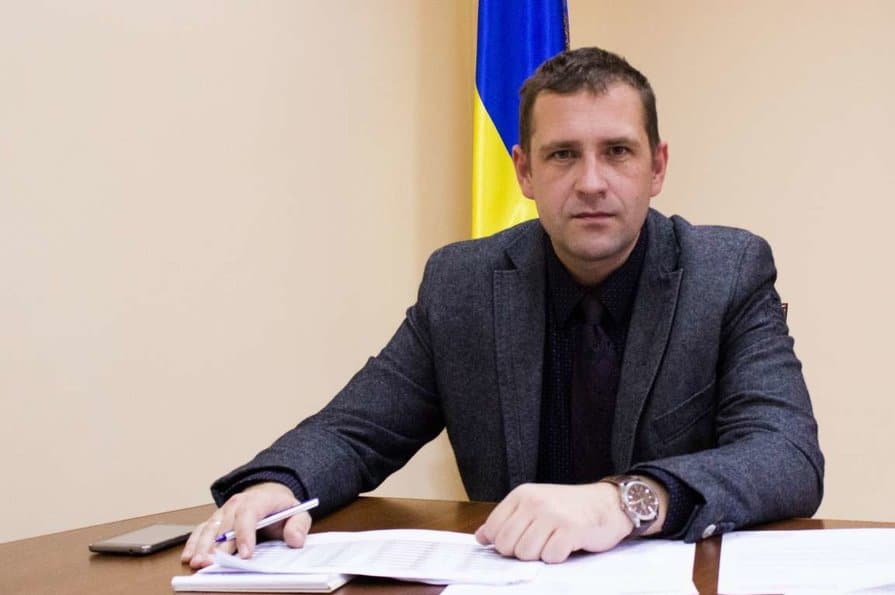
Boris Babin, Legal Advisor at BARRISTERS, LLC, on the "war" between ombudsmen and human rights.
We have now had five years of interstate conflict and the occupation of Ukrainian territories; allegations by both sides of the conflict regarding massive human rights violations have become a powerful weapon in both the information war and the legal battle.
Ukraine is currently pursuing five interstate cases against Russia in the European Court of Human Rights, while the Investigative Committee of the Russian Federation is churning out criminal cases alleging “international crimes” against our military personnel; both states speak of “political prisoners” in “enemy torture chambers.”
How are the ombudsmen of the warring parties behaving in this situation, and what should be done in a situation that can already be called a “war of ombudsmen”?
The start of Russia’s aggression was accompanied by a change in the Russian ombudsman. In March 2014, Ella Pamfilova assumed this position; she is a member of the Russian Federation’s leadership team, a professional Russian politician with a background in the Communist Party and labor unions, an education in the energy sector, and experience in social sector management.
After Ms. Pamfilova was transferred to a “more responsible position” as chair of the Russian Central Election Commission in 2016, Tatyana Moskalkova became the Russian Federation’s ombudswoman, a professional lawyer with significant practical experience in the pardon system and the Ministry of Internal Affairs, who is now fashionably referred to (due to her previous police stripes) as the “Lieutenant General for Human Rights.”
Ms. Moskalkova’s statements and her rather active and consistent actions in the sphere of “human rights,” which (in her words) is used by “Western and American institutions” as a tool to “put pressure on Russia,” indicate that her appointment was a well-considered and quite successful move by the Russian leadership, with her legal expertise being a key factor in her selection.
At the same time, Ms. Moskalkova’s limited political ambitions, her complete loyalty to the Russian leadership, and, at the same time, her limited scope for making decisions are evident.
At one time, a similar role in professionally shielding Yanukovych from “human rights issues” (albeit not from external challenges, but from accusations by the opposition) was to be fulfilled by Ukrainian Ombudsman Valeria Lutkovska, who was elected by a majority of Party of Regions members in 2012.
It was she—a professional lawyer with many years of experience leading departments within the Ministry of Justice, including before the European Court of Human Rights—who served as the ombudswoman with whom we went to war.
But after her term ended in 2017, parliament was unable to elect a new human rights commissioner for nearly a year, until Ms. Lyudmyla Denisova—a professional politician with a law degree, whose career in the Komsomol and government service took place primarily in Crimea under the auspices of “Batkivshchyna” and later “Narodnyi Front.”
Throughout 2018, it became evident that the cooperation between Moskalkova and Denisova on human rights issues giving rise to interstate conflict “had not materialized.” Both ombudswomen began making negative statements—no longer even about the “Kyiv junta” or the “bloody Kremlin regime,” but specifically about their counterpart.
Subsequently, the activities of former Ombudswoman Nina Karpachova intensified rapidly, and Ms. Moskalkova—unlike Denisova—began to actively and demonstratively cooperate with her on “Ukrainian matters.” This, in turn, led to public accusations by Ukrainian politicians and the media that Russia was carrying out “dirty plans to discredit” the Ukrainian ombudswoman.
I have already written that it is somewhat naive to publicly accuse the aggressor of pursuing some kind of anti-Ukrainian agenda, particularly in the sphere of human rights—after all, that is precisely why it is an aggressor: to pursue such plans.
And if, after five years of war, we haven’t managed to secure neutral and impartial mediators for humanitarian negotiations with Russia —the Russians will not hesitate to find a whole host of “impartial negotiators” with virtually spotless reputations in the eyes of the international community.
Moreover, our post-Soviet, propaganda-driven, and clumsy approach to the issues of political prisoners and prisoners of war in and of itself provides the Russians with virtually unlimited opportunities in this area.
And of course, the situation isn’t helped by the fact that our “quota-based ombudsman” is more interested in gathering votes for the parliamentary elections than in defending human rights. Moreover, as a representative of a reputable international organization told me, if a person writes about confidential negotiations on social media after they’ve taken place, essentially no one will be willing to negotiate anything with that person anymore.
For example, we should not currently expect the Ombudsman’s office to engage in extremely “toxic”—yet absolutely necessary—practical efforts to protect the rights of accused and indicted collaborators and Russian combatants held in Ukrainian detention facilities.
Instead of demonstrating the Ukrainian state’s humanitarianism, countering enemy propaganda, and drawing the attention of Russian society to our existing “exchange fund,” we are currently faced with reports of Russians dying in Ukrainian prisons “from being squeezed by light bulbs” and controversial statements by our ombudsman regarding these individuals, comparable to Ms. Moskalkova’s brutal remarks about Oleg Sentsov.
A completely unresolved issue is the approach to the “ombudsmen” appointed by the Russian Federation in the occupied territories—in the puppet “DPR,” “LPR,” and the “Republic of Crimea.”
For example, the Crimean “ombudsman,” Ms. Lyudmila Lubina, a former lawyer with extensive experience, has devoted considerable attention in her recent statements to the 36 “Crimean political prisoners” whom “Ukraine is holding.”
Of course, it is positive that in her own interviews, Lubina, among other things, acknowledged the state of war between the Russian Federation and Ukraine and recognized that in 2019, Russia is deliberately avoiding any interaction on exchange issues due to the pre-election situation in Ukraine. But it is completely unclear how and through whom one should interact with this eccentric individual, not to mention the “ombudsmen” of the occupied east.
Incidentally, in 2018, Mr. Ismail Khalikov was appointed as the Ombudsman’s representative for Crimea.
However, as his public statements suggest, he is primarily concerned with expediting the procedures for replacing passport photos and military registration procedures for Crimeans. No personal initiatives or prior experience in “human rights issues” have been observed on the part of Mr. Khalikov, who was clearly appointed under a quota reserved for the Mejlis of the Crimean Tatar people.
Under these circumstances, the “war of the ombudsmen” will most likely escalate, and high-profile statements about “horrific human rights violations” by the other side of the conflict will increase, but for now, it is impossible to rely on the ombudsman institutions of either state—whether as components of negotiation processes on humanitarian issues or as a real, more or less effective, and non-politicized tool for assisting war victims.
Under these circumstances, non-governmental initiatives in the field of human rights will increase, and the extent to which they will serve the interests of detainees and prisoners, protect the population of the occupied and government-controlled territories, or, at the very least, not undermine Ukraine’s national security—is a purely rhetorical question.
But by definition, nothing good can come of the aforementioned atrophy of the institution of the Parliamentary Commissioner for Human Rights. Especially in wartime.
Boris Babin, exclusively for UP
Author: Boris Babin
Source: