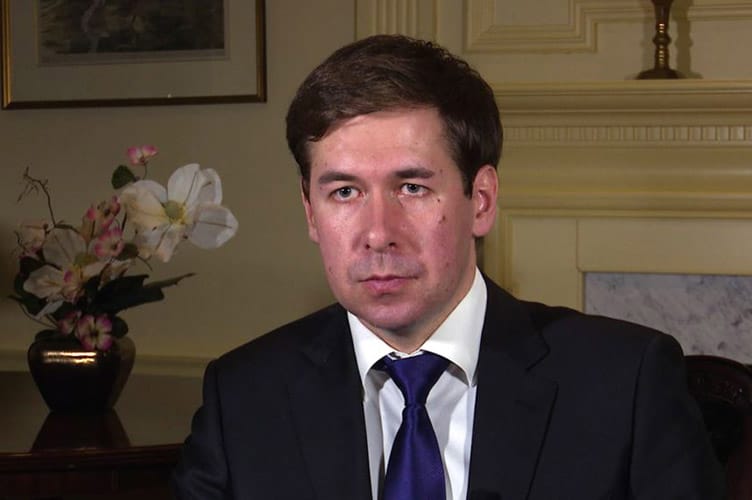
Ilya Novikov, attorney and partner at BARRISTERS, LLC: “In this case, we fully understand that the judges will have no choice.”
“In this case, we fully understand that the judges will have no choice”
Russian border guards detained 22 sailors from the patrol boats “Nikopol” and “Berdyansk” and the tugboat “Yani Kapu,” as well as two employees of the Security Service of Ukraine, near the Kerch Strait. The Ukrainians are charged with illegally crossing the border and face up to six years in prison. Ilya NOVIKOV, a partner at the Barristers law firm and attorney for one of the sailors, spoke about the course of the trial, the reaction of world leaders, and why the defense doubts the impartiality of the Russian judges.
“The investigation does not allow lawyers to replace one another while defending their clients”
— You are part of the team of lawyers defending the Ukrainian sailors. How many lawyers are there in total? Are there Ukrainian lawyers and legal experts from other countries among them?
— Although we insist that this case
falls within the scope of humanitarian international law and should be treated as a case involving prisoners of war, the basis for our participation in it is the Criminal Procedure Code of the Russian Federation. Therefore, foreign lawyers are barred from representing the interests of Ukrainian citizens. There are lawyers who are Crimean Tatars. Some of them hold attorney status in Ukraine, but this is not reflected in the procedural documents. They are listed as attorneys whose information is entered in the register of attorneys of the Republic of Crimea or the city of Sevastopol. And on this basis, they have been admitted to the defense.
The number of attorneys is determined by the specifics of the case. Currently, the main problem is that the investigative authorities do not allow attorneys to substitute for one another while defending clients. In a case like this, it is standard practice for several attorneys to cross-represent multiple defendants. In such cases, the attorneys are interchangeable, and if one of them cannot be present at the trial, a colleague takes over the defense.
However, since this case is unique, the investigation has adopted an approach that prohibits such interchangeability. As a result, there are about 30 lawyers for 24 defendants. I cannot give an exact number. After all, there have already been substitutions since the start of the trial. And going forward, if special circumstances arise, experts will come and go.
As for foreign experts, of course, we plan to consult with them.
— What questions will you ask them?
— The fact is that the Geneva Convention on the Treatment of Prisoners of War has a fairly broad scope of application. Just as Russia currently refuses to acknowledge the armed conflict with Ukraine, many countries in the second half of the 20th century—even when they were effectively at war—were reluctant to declare or recognize the war. This was due to a host of unpleasant consequences, including the application of those very conventions. Therefore, we have few precedents to draw upon when building our defense strategy.
Similarly, there are relatively few experts worldwide who have worked with Article 2 of the convention. Typically, law students study this document in their third or fourth years and forget it once they pass the course, as they have no practical experience applying the knowledge they’ve gained. So, of course, advice from practitioners who have had to apply this provision will be helpful.
— It is well known that many foreign politicians are advocating for the release of Ukrainian sailors…
— Yes, it has been stated from many global platforms that the Ukrainian sailors are entitled to unconditional release. However, all these calls have been made without reference to any conventions. They go something like this: “Russia must release the sailors because they were captured illegally. And we demand their release because we believe it is the right thing to do.”
In fact, the first document in which the international community recognized that international humanitarian law and the Geneva Conventions apply to the sailors was the PACE resolution adopted on January 24, 2019, in Strasbourg. Although the Ukrainian side did not secure the wording “prisoners of war,” the text of the resolution is considered entirely satisfactory. The defense is also satisfied with the document. After all, up until then, we had constantly heard objections from the judges and the prosecution regarding how the sailors could be recognized as prisoners of war if there was no war.
— So, without the resolution, the politicians’ statements were ineffective?
— Such statements have no legal consequences for Russia. At the same time, they affect its standing on the international stage. We know how important it is for the Russian president to be the center of attention for the international community. Therefore, the fact that the U.S. president refused to meet with his Russian counterpart until the situation is resolved will not go unnoticed in Russia.
I’ll go even further: such statements are probably the best leverage that Europe and the U.S. can wield. This is because any sanctions take a long time to be approved, are imposed for a specific period, and require renewal. But when the U.S. president simply says he will not meet with the Russian president, that cannot be challenged or reversed. That is why, as the defense attorney for one of the sailors, I want to see as many statements as possible from international politicians.
“I am confident that we will receive all the information we have requested from the Ukrainian side.”
— Sailors are military personnel. Their activities are governed by departmental orders, which have varying degrees of transparency. Can lawyers access information contained in classified documents?
— We are currently corresponding on this issue. I think we’ll be able to obtain all the necessary documents. The thing is, no one knows the actual state of affairs. Russian investigators are working with the information they’ve managed to gather. The Ukrainian military command is working with the information it has. And the lawyers are working with their own data.
Problems arise even when interviewing the sailors themselves. Naturally, each of them remembers the situation in their own way, and these recollections sometimes don’t match up. It takes a lot of work to piece everything together and build a watertight case.
We spent the entire month of December appealing the first arrest. We spent the entire working month of January—which began in Russia on the 9th—appealing the second arrest. In fact, it wasn’t until February, when the appellate court ruled on the arrest, that we had a little time to work according to our own schedule. I am confident that we will receive all the information we requested from the Ukrainian side.
As for confidentiality, Russian investigators did indeed demand that the hearing on the extension of the detention be held in closed session. The court accommodated the investigation, even though there are no classified documents in the case file. This is evidenced by the fact that we were allowed to copy all the materials. If there had been classified documents, we would not have had that opportunity.
— But if classified documents do appear, could the trial be closed to the public?
— Right now, we can see that the Russian side wants to make this trial a show trial. And there’s no point in “closing” a trial like that. Of course, they could change their tune later on. But for now, that’s the trend.
— Is it better for the Ukrainian sailors if the trial is open?
— I don’t see any advantages to a closed trial for our guys. However, if they decide to close it, we won’t be able to effectively challenge that decision.
“We’re interested in prompt decisions, which we can expect more quickly from politicians than from judges.”
— It’s known that the European Court of Human Rights is involved in this case. In what way?
— Ukraine filed a complaint with the ECHR. And now individual applications are being prepared by each of the sailors. Ukrainian lawyers are handling this. We have a division of responsibilities. Therefore, the Ukrainian side is coordinating the process of filing with the ECHR to ensure that the applications do not contradict one another.
— What decision is expected from the ECHR, and what, exactly, was requested?
— The decision won’t come quickly. We requested that the Russian Federation be required to provide information on the sailors’ health. The ECHR ordered Russia to do so, but Russia has still not fulfilled its obligation.
We’ll see what happens if we proceed to the merits of the case before the ECHR. The European Court does not apply the Geneva Convention, but rather the Convention for the Protection of Human Rights and Fundamental Freedoms. Therefore, the concept of “prisoners of war” cannot be the primary consideration for the Court. It will first and foremost analyze the course of the criminal proceedings: whether the sailors’ right to a defense was ensured; whether the violence used against them was justified; and whether it was permissible to fire upon them in such a situation. In any case, even when a case is given priority, it takes at least a year. But we are interested in prompt decisions, which we can more reasonably expect from politicians rather than from judges.
“If the case does not unfold as the Russian leadership would like, we can expect to face some pressure as well.”
— In Ukraine, lawyers involved in “toxic” cases may be subject to certain pressures.
Pre-trial investigation authorities, the prosecutor’s office, civil society activists, and others may try to force a lawyer to change their mind. Do you feel any pressure while defending the Ukrainian sailors?
— A member of our team—Emil Kulbidinov—faced pressure from law enforcement agencies when he began defending one of the sailors. He was placed under administrative arrest for a social media post regarding Crimea. The post was made in 2013, long before the events that unfolded on the peninsula. However, a Russian court considers it acceptable to hold the lawyer accountable right now.
Immediately after the verdict was announced, the Bar Association received a letter from the Russian Ministry of Justice demanding that the lawyer be expelled from the association as a person subject to an administrative penalty. This story is not over yet. We are closely monitoring its progress and “projecting” the situation onto ourselves. After all, we understand that if the case does not unfold as the Russian leadership would like, we, too, can expect to face certain pressures.
— And how does the public in Russia view this process?
— In Russia, there is effectively no public as such. The public is currently mainly concerned that prices in stores have risen by a quarter, utility rates have increased, and wages have decreased. Against this backdrop, news about the Ukrainian sailors simply gets lost. Yes, there are liberal media outlets that discuss the situation. They have their own audience. However, this audience does not constitute a significant portion of the Russian public.
Perhaps this is for the best. After all, our resources are no match for those of the state-run media. And if the outcome of this matter depended on the mood of the Russian public, we might as well consider it a lost cause.
“It’s in the investigative authorities’ interest to sow discord in our joint cause”
— You work as part of a large legal team. Are there any particular challenges to this kind of collaboration? What skills come in handy when working together?
— It requires a great deal of responsibility and a sense of support. It would seem logical for lawyers defending ordinary sailors to insist that their clients know nothing, that they were following orders, and therefore the commanders should be tried while the sailors should be released. And it would not be unreasonable to argue that such a position would be absurd. In a case without international implications, for a lawyer defending the interests of a specific client rather than the group as a whole, such a tactic would be justified.
However, in our case, both the lawyers and their clients understand that they share common interests. And I hope it stays that way. It’s very important to us that we can work together—that everyone adheres to a unified position and does not pursue individual defense strategies.
Although we know that the investigation has, in one way or another, encouraged certain members of our team to do so and will continue to do so in the future. After all, it is in the investigative authorities’ interest to sow discord in our joint case.
— Do you notice a difference between Russian and Ukrainian courts?
— Yes. The difference is fundamental. It makes no sense to talk about the process in general. But we understand perfectly well that in this case, the judges will have no choice. In other cases, even politically charged ones, they may have some leeway.
For example, a year ago I defended a young man who was on trial for allegedly assaulting a police officer during a rally. The prosecution sought a three-year prison sentence for my client. There were several such cases. And in all of them, where the prosecutor sought three years, the court “knocked off” half a year. In other words, we could expect a 2.5-year prison sentence. However, the judge presiding over this case sentenced the young man to one year in prison. And after two months, he was released. He is currently at home.
In this case, not even that will happen. A striking example is the hearings on extending the detention period that took place on January 15. By that time, we had already formulated our legal positions and understood what we would rely on during the defense.
There were three judges. All the defendants were divided into groups of four. Each judge considered two of these “groups of four.” The defense filed a motion to change the detainees’ status to that of prisoners of war. This request was denied in all hearings. Moreover, all the denials used identical wording. Theoretically, if the judges were independent, their decisions would differ at least in the reasoning section.
Of course, this approach by the judges also affects our strategy. When we appear before the court, our goal is not to convince the judge, but to choose the right words that will be reflected in the verdicts so that they can later be used in international institutions.
“If a detainee starts playing games with the investigation, he will inevitably lose”
— The situation with the Ukrainian sailors is unique. However, it’s not out of the question that it could happen again. What should a Ukrainian citizen do if they are detained on the territory of another country? Who can they call?
— If it’s in Russia, they most likely won’t let them call anyone. Of course, Russian investigative authorities are required to notify the Ukrainian embassy of the arrest. But they don’t do this by phone—they do it by mail. By the time the letter arrives—especially if it’s sent from border regions—it will be too late to do anything, since the person will have already been in custody for a week or two, and they could be subjected to anything.
Of course, in such a situation, a person is at a loss, since no one provides any instructions on how to behave under these circumstances. For example, no one warned the sailors that they needed to invoke the Geneva Conventions. Now, if Ukrainian military personnel find themselves in a similar situation, they’ll know about this. And I wouldn’t rule out that invoking these conventions in the first hours of detention could later simplify a lawyer’s work.
But what you should never do under any circumstances is cooperate with the investigators. Law enforcement officials have various approaches. And it doesn’t necessarily involve torture. They might offer you hot tea or start asking about things that, on the surface, seem unrelated to the case. It’s a sort of “good cop, bad cop” game. However, if the detainee starts “playing along” with the investigators, they will inevitably lose.
Author: KATERYNA BELYAYEVA
Source: