-
In an exclusive interview, Oleksiy Shevchuk explained how Ukrainian linguists, analysts, and lawyers can influence the course of investigations in The Hague.
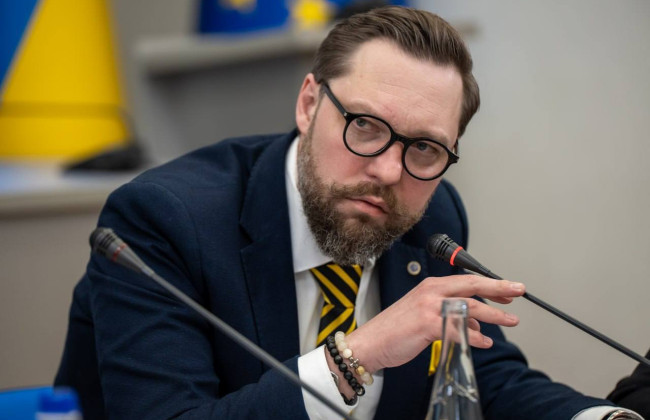
Today, Ukraine is at the center of attention for international criminal justice in connection with the investigation of war crimes. Arrest warrants that are being ignored, the ICC’s lack of its own police force, and the need for Ukrainian experts all demonstrate the necessity of exerting real influence on the work of the Hague Tribunal. In an interview with the “Judicial and Legal Gazette,” Oleksiy Shevchuk, a renowned Ukrainian attorney and and candidate for the position of judge at the International Criminal Court, Oleksiy Shevchuk, spoke in an interview with the “Judicial and Legal Gazette” about Ukraine’s role in the international justice system and why Ukraine’s experience offers a unique opportunity to reform the system.- Mr. Shevchuk, why do you believe that the integration of Ukrainian experts into the structure of the International Criminal Court is so important right now?
Oleksiy Shevchuk: Because for Ukraine, this is not just a matter of justice, but also a matter of influencing the future international justice system. There are currently open positions on the ICC’s official website, particularly in the Office of the Prosecutor and other departments, and the Court specifically emphasizes the need for geographic representation and diversity. If we do not begin training Ukrainian specialists now, in a few years we will be forced to catch up on what we should have been building today.
- There is a stereotype that working in The Hague is the exclusive prerogative of a very narrow circle of experts in public international law.
Oleksiy Shevchuk: No, and that is precisely what is important to explain. The ICC’s job openings include not only legal positions but also roles in language support, coordination, analytics, human resources, and administration. For example, there was recently a vacancy for a Language Assistant (Ukrainian and Russian), which shows that Ukrainian expertise is needed not only in the courtroom but also in the day-to-day operations of the entire institution.
- What are the practical benefits for the judicial system of having representatives from our country work in the departments of the Office of the Prosecutor or the ICC Secretariat?
Oleksiy Shevchuk: The practical benefit is twofold. First, Ukrainian specialists gain access to expertise that subsequently benefits the Ukrainian justice system, diplomacy, and public administration. Second, Ukraine gains individuals who can professionally represent our perspective in international institutions, which is crucial when it comes to war crimes, deportations, torture, or attacks on civilians.
- Is there really a demand at the ICC for candidates from Ukraine?
Oleksiy Shevchuk: Yes, and this is evident not only from specific job openings but also from the logic of the recruitment process itself. The ICC explicitly states that it encourages candidates from underrepresented States Parties and emphasizes its goal of ensuring geographic balance. In other words, for Ukrainians, this is not just a formal opportunity but a real direction in which to invest their professional development.
- What specific steps need to be taken right now to make Ukrainian candidates competitive in the international legal market?
Oleksiy Shevchuk: We need to develop training programs for young Ukrainian lawyers, translators, analysts, investigators, and administrative specialists. We need training in international criminal law, legal English, writing cover letters, preparing for competitive selection processes, and understanding ICC procedures. If we fail to do this, we will lose the chance to turn the current demand for justice into a long-term presence for Ukraine in international institutions.
- Why can’t this issue be postponed until after the war?
Oleksiy Shevchuk: Because building a human resources infrastructure takes a long time. A person does not become ready for an international institution in just one year—it requires experience, language skills, practical experience, a network of contacts, and an understanding of the system. If we wait until after the war to begin, we will lose valuable time when international attention on Ukraine is at its peak.
- You’re talking not only about holding perpetrators accountable but also about enforcing the decisions of the International Criminal Court. What is the main problem here?
Oleksiy Shevchuk: The main problem is that international justice doesn’t end with a verdict. The sentence must also be actually carried out. And today, the International Criminal Court does not have its own prison system where sentences would be served. To that end, it relies on states that agree to accept convicted individuals. In other words, the mechanism exists, but it is not entirely self-sufficient.
- So you believe the system is incomplete?
Oleksiy Shevchuk: Exactly. It’s essentially an incomplete cycle. The Court can investigate, bring charges, and issue rulings, but the actual enforcement of sentences depends on cooperation among states. And if that cooperation is weak or politically selective, then the effectiveness of the entire mechanism is undermined.
- What about the arrest of those who are wanted?
Oleksiy Shevchuk: There’s a serious limitation here as well. The International Criminal Court does not have its own police force or law enforcement agency with cross-border authority. It cannot go out on its own to arrest a suspect. This means that all work related to arrest, transport, and ensuring the suspect’s appearance in court depends largely on the member states and their willingness to fulfill their obligations.
- But shouldn’t the member states do this automatically?
Oleksiy Shevchuk: In theory, yes. In practice, not always. And that is precisely why scandals arise when certain states drag out the process or effectively fail to fulfill their obligations. This undermines trust in the system and creates the impression that international law is applied selectively.
- Are you referring to the case involving Mongolia and Putin?
Oleksiy Shevchuk: Yes, that’s a very telling example. When a state party has had obligations to the Court for years but fails to ensure compliance with its requirements, it looks like a serious failure of the system. Especially if the response amounts to nothing more than formal correspondence, while the person subject to the arrest warrant is already leaving the country unhindered. For international justice, this is a blow to its authority.
- Why, in your opinion, do even member states behave this way?
Oleksiy Shevchuk: There may be various reasons: political pressure, fear of the consequences, dependence on major powers, domestic geopolitical interests, or a desire to avoid conflict. But from a legal standpoint, this is no excuse. If a state is a party to the system, it must act not merely in name but in reality.
- What solution to this crisis do you see?
Oleksiy Shevchuk: We need to strengthen the mechanisms holding states accountable for failing to comply with the Court’s decisions. It is also important to build stronger international political will so that ICC warrants do not remain mere pieces of paper. And, of course, we must support states that are willing to cooperate honestly with the Court.
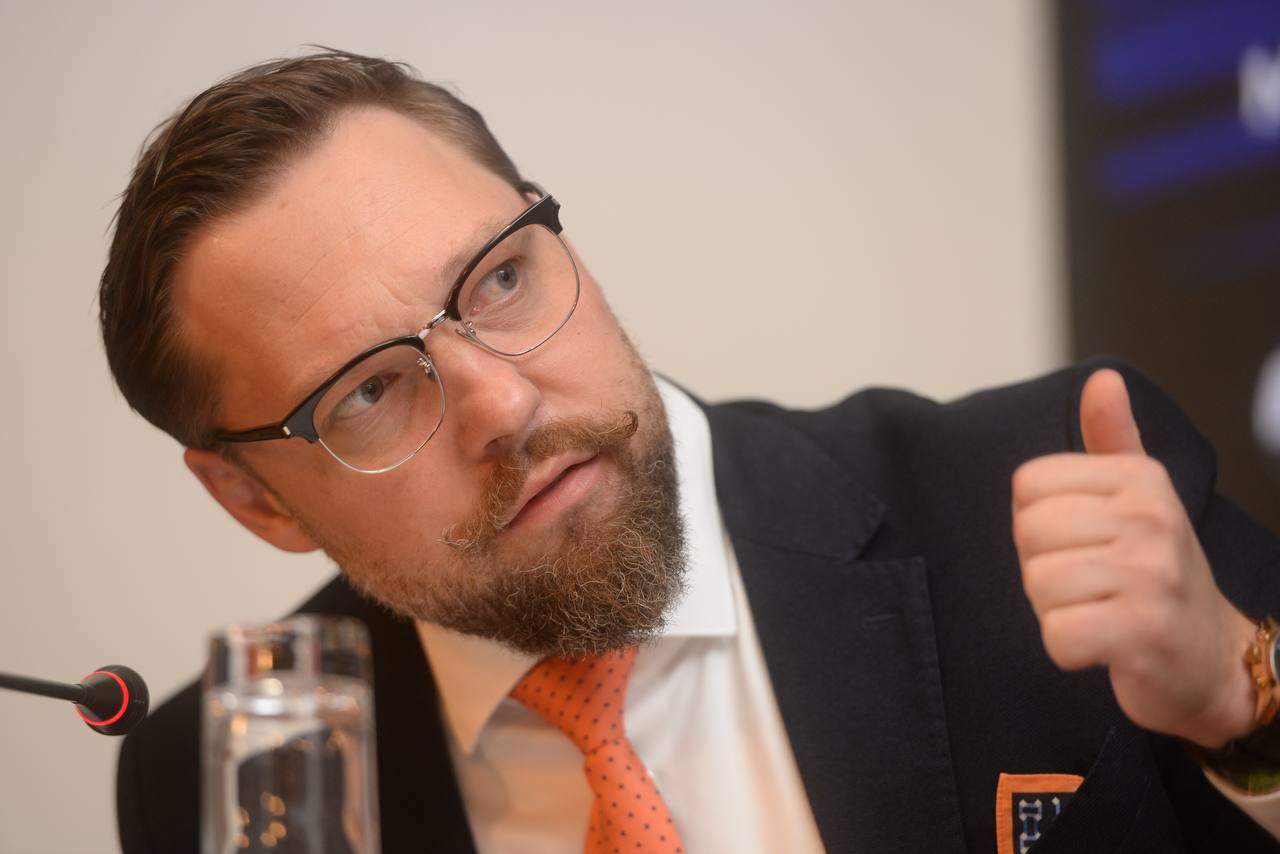
- So the problem lies not only with the Court, but also with the political will of states?
Oleksiy Shevchuk: Exactly. The ICC can issue the most legally sound ruling, but without actual enforcement, it does not have its full effect. Therefore, the fight for justice is not only the work of judges and prosecutors but also a test of states’ accountability.
- What other problems do you see in the work of the International Criminal Court today?
Oleksiy Shevchuk: Aside from the issue of enforcing sentences and apprehending the accused, there is another very important problem—funding. This is not just about budgets per se, but about the Court’s ability to operate consistently, fairly, and effectively. When difficulties arise with judges’ salaries or compensation payments to victims, this is no longer merely a technical problem but a sign of systemic vulnerability.
- So you believe that the Court’s very model of operation needs to be updated?
Oleksiy Shevchuk: Yes, without a doubt. Today, there is a need for a deeper rethinking of the procedural mechanisms of international criminal justice. The world has changed; conflicts have become more complex, the scale of crimes has grown, and victims’ expectations are significantly higher. Therefore, procedural rules must reflect contemporary realities, not just the historical logic upon which the Court was founded.
- And does Ukraine play a special role here?
Oleksiy Shevchuk: Exactly. The Ukrainian case is unique because it simultaneously involves nearly all categories of crimes that fall under the jurisdiction of the International Criminal Court. At the same time, it is precisely in the Ukrainian context that all the weaknesses of the international system have become very clear: from the complexity of the response to financial constraints and procedural gaps. In other words, Ukraine has become not only a victim of these crimes but also a case that has highlighted where the system needs reform.
- Are you saying that the Ukrainian case could influence the future of international law?
Oleksiy Shevchuk: Yes, and it’s very important to realize this. The Ukrainian experience already shows that existing mechanisms are not always sufficient to address modern war crimes, crimes against humanity, and other gross violations. That is precisely why the Ukrainian case can serve as a model for updating procedural approaches, strengthening the Court’s tools, and shaping a more effective international model of justice.
- What is the key message we should take away from this situation?
Oleksiy Shevchuk: The main conclusion is very simple: Ukraine today not only needs justice but is also shaping a new international practice. We have the right to demand not only the punishment of the guilty but also the reform of the system itself so that it better responds to the real challenges of our time.
And in this sense, the Ukrainian case is not just another proceeding, but a historic lesson for the entire international criminal justice system.
Author: Oleksiy Shevchuk, Attorney and Partner at Barristers
Source: https://sud.ua/uk/news/publication/357315-aleksey-shevchuk-ukrainskiy-keys-v-mus-eto-ne-prosto-rassledovanie-a-shans-na-reformu-mirovogo-pravosudiya