The world has gone digital. Almost everyone has a smartphone and the ability to find out about anything from the other side of the world. People communicate via social media or messaging apps. However, digitalization has also raised security concerns. For many years now, there has been debate in Ukraine over whether to block Telegram—a cross-platform messaging app that is extremely popular among Ukrainians. According to a survey conducted by the international research firm Ipsos from November 14–28, 2025, 62% of Ukrainians cited Telegram as a source of news and information. Among Ukrainian youth, the figure is even higher—84%.
The issue of blocking Telegram has gained renewed attention following the terrorist attacks that took place in late February in Dnipro, Mykolaiv, and Lviv. Police officers were killed in those attacks, and Telegram was used by Russia as a tool to recruit Ukrainians.
So, will Telegram actually be blocked? Does Ukraine have the tools to do so? And will this solve the problem that is so pressing today? Journalists from UA.NEWS spoke with experts on these topics.
How Telegram Went from a Messaging App to a National
Security Issue
The issue of blocking Telegram has been a topic of discussion in Ukraine for quite some time. It first arose back in 2017 following the blocking of Russian platforms such as VKontakte, Odnoklassniki, and Mail.ru. Ukrainians began looking for alternative ways to stay connected online. Thus, Telegram became one of the options for switching platforms and gradually began to gain popularity among Ukrainians. However, even then it was clear that the platform had direct ties to Russia, as its founder is Pavel Durov. Cybersecurity experts highlighted the “Russian footprint” in the messenger’s architecture.
Nevertheless, the messaging app was only gaining a foothold in the Ukrainian market. By the start of the full-scale invasion, Telegram already featured chatbots for Ukrzaliznytsia and the government app “Diya.” Public figures were actively creating their own channels on Telegram, gaining subscribers. News channels were also registered on the app; today, they have several million subscribers each and serve as one of the main sources of information for Ukrainians.
In 2022, Russia launched a full-scale war in Ukraine. Telegram became a key communication channel among the population, though Ukrainian security agencies regularly warned about the platform’s risks. In 2024, the problem begins to be officially recognized at the level of Ukrainian intelligence agencies. On February 14, 2024, Andriy Yusov, a representative of the Main Intelligence Directorate of the Ministry of Defense, publicly states that Telegram poses a number of real threats to Ukraine’s security.
On March 25, 2024, Bill No. 11115 on the “regulation of platforms for shared access to information” was registered in the Verkhovna Rada. The media community and the bill’s authors (Mykola Knyazhitsky, Mykyta Poturaev, Yaroslav Yurchyshyn, and others) directly linked it to Telegram’s activities. The bill proposed treating Telegram as a media outlet, which would require the platform to disclose its ownership structure and appoint an official representative in Ukraine. Two days later, former head of the Main Intelligence Directorate of the Ministry of Defense Kirill Budanov called Telegram “a problem from the perspective of national security.” According to him, the issue is not a desire to impose censorship, but the technical impossibility of controlling anonymous networks through which the enemy coordinates its activities.
The debate became particularly heated when Telegram turned into a tool for recruiting perpetrators of terrorist attacks and sabotage. Between 2024 and 2025, law enforcement agencies recorded hundreds of cases in which teenagers and vulnerable segments of the population carried out orders from the Russian Federation for money via anonymous chat rooms. The perpetrators set fire to military vehicles and railway relay cabinets and monitored critical infrastructure.
The
government decided to respond decisively. In mid-September 2024, the National Cybersecurity Coordination Center under the National Security and Defense Council imposed restrictions on the use of Telegram. Its use was banned on work devices belonging to government employees, military personnel, and operators of critical infrastructure. Starting in November 2024, a number of educational institutions also implemented the ban. These include, in particular, Taras Shevchenko National University of Kyiv and the Ukrainian Catholic University. As of January 1, 2025, the Kyiv-Mohyla Academy also joined this ban.
The Security Service of Ukraine (SBU) confirmed the scale of Russian involvement in manipulating young people. In April 2025, it was revealed that 22% of those recruited for sabotage operations were minors.
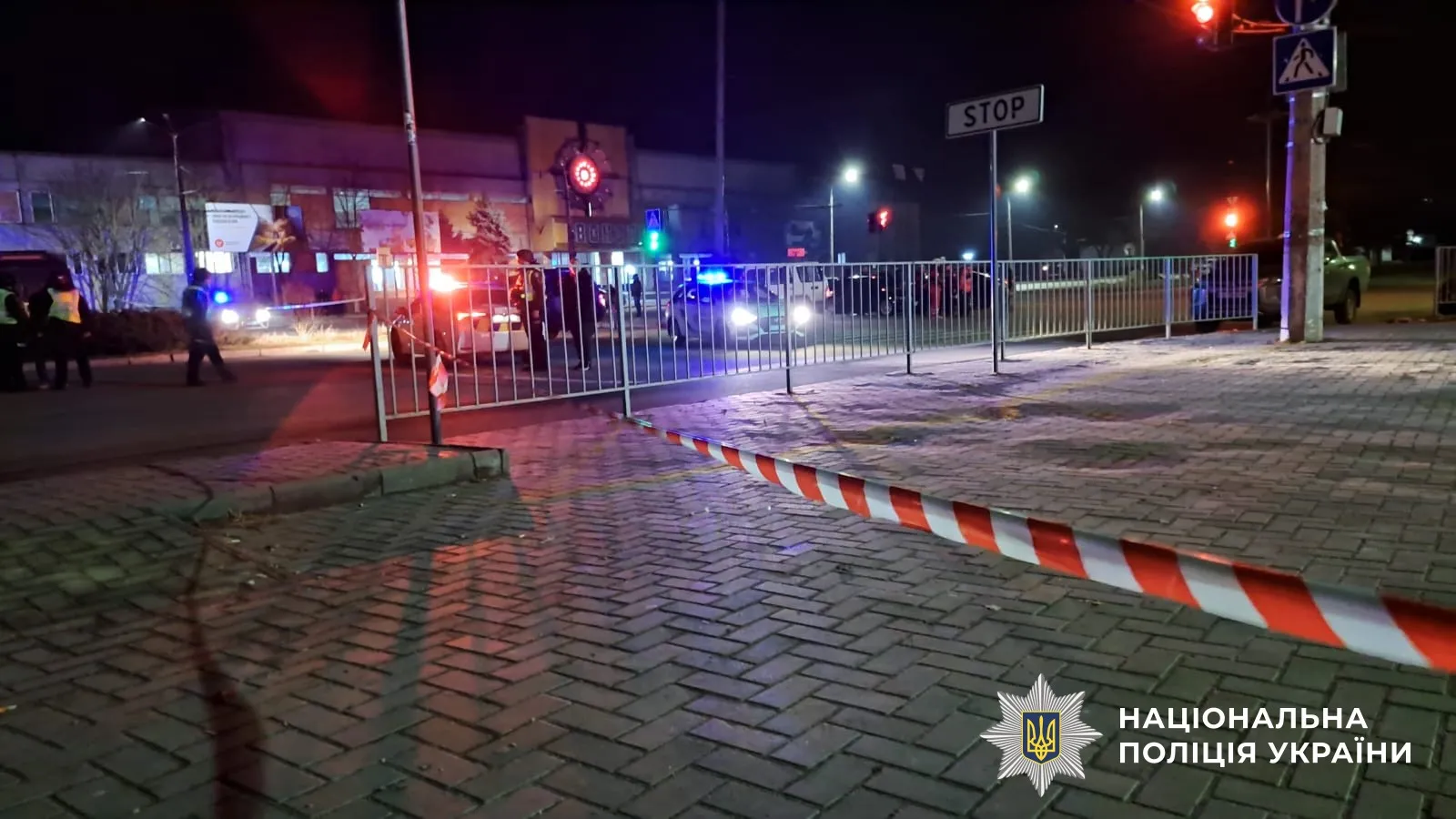
However, February 2026 came as a real shock. On February 23, two terrorist attacks occurred in the country. In Mykolaiv, an explosion at a gas station injured seven patrol officers. In Dnipro, an explosion damaged a police station building. The investigation determined that the handlers communicated with the perpetrators of both crimes specifically via Telegram.
Why Shutting Down Telegram Won’t Cause Social Upheaval
Despite the aforementioned events, political scientist Volodymyr Fesenko calls for a more sober and pragmatic assessment of the platform’s actual impact on Ukrainian society. In his view, we should not exaggerate Telegram’s significance as the “foundation” of our information ecosystem. Nor should we expect social upheaval if restrictions are imposed on it.
“I don’t think there’s an immediate threat of Telegram being shut down right now. There are people in power who use Telegram for their own interests. I don’t see any grounds for debate. There is a discussion, but there will be no shutdown. Ukrainian society is diverse. It is not homogeneous. And within society, there are both opponents and supporters of banning Telegram,” the expert comments.
Fesenko is convinced that fears of losing the trust of young people are unfounded. First, Telegram does not have a monopoly in Ukraine, as a significant portion of the young audience has long since shifted its focus to TikTok and other video platforms. Second, for most young people, politics is not a priority, so shutting down the messaging app won’t trigger mass protests.
“There’s no need to assume that Telegram is the only or the fastest source of information. Viber once reigned supreme; today, it’s becoming a thing of the past. Telegram, too, will fade away over time, without any forced bans,” notes Volodymyr Fesenko.

How the law allows for punishing fake news on Telegram and confiscating admins’
laptops
While the public debate continues over whether a complete ban is necessary, the Ukrainian legal framework already offers tools for a more precise and practical response. Mykhailo Bochevary, an attorney with the “Barristers” law firm, notes that for a long time, society has viewed Telegram as a “safe zone.” And the creator of a message is not held liable for fake news, defamation, or the disclosure of state secrets.
However, as the expert points out, the law today allows not only for fining channel owners but also for issuing court orders to completely block their resources. From a legal standpoint, the administrator of a Telegram channel is considered a distributor of information. Therefore, that person is obligated to comply with the law.
“Violations related to content are classified under several articles of the Code of Administrative Offenses: spreading false rumors (Art. 1731), violations of personal data legislation (Arts. 188–39), violations of intellectual property rights (Article 512), and violations of laws on information, advertising, and the media (Article 2123). One of the most common grounds for administrative liability is the dissemination of false rumors. If a channel publishes false or defamatory information about a person, this may fall under Article 1731 of the Code of Administrative Offenses. “In practice, courts treat administrators of even anonymous channels as public disseminators of information and may impose fines,” the expert comments.
The
attorney adds that there has already been a precedent in this case. On January 27, a district court in the Odesa region held an individual liable. The reason was a Telegram channel that had been created, on which photos of students were published along with false information about them.
“Equally important is copyright infringement—the use of others’ photos, videos, or texts without permission. In such cases, under Article 512 of the Code of Administrative Offenses, a fine of up to 5,100 UAH may be imposed, and in particularly egregious cases—even the confiscation of equipment, such as the mobile device or laptop used to operate the channel,” notes Bochevary.
If a Telegram channel’s activities threaten national security, the state may bring out the “heavy artillery.”
“There are several different ways in which Ukrainian authorities can initiate restrictions on access to content on Telegram. The most common is filing a lawsuit in which the affected individual (or government agency) requests that the channel’s actions be declared illegal and that providers be ordered to block access. Law enforcement agencies also take action in parallel: the Security Service of Ukraine, the Cyber Police, or even the Office of the Prosecutor General may submit a motion to the National Security and Defense Council to add specific Telegramchannels or their owners to the sanctions list, or apply to an investigating judge as part of criminal proceedings to restrict access to such channels. This already provides grounds for blocking at the national level: IP restrictions, DNS blocking, and account suspension through international requests to Telegram.”
According to the lawyer, despite the absence of a Telegram office in Ukraine, the state has already learned how to restrict access to dangerous resources. One of the most well-known examples is the case against a network of channels operated by Russian intelligence agencies. Back in February 2023, a court banned the popular channels “Resident,” “Legitimny,” “Kartel,” and “Spletnitsa” in Ukraine, ordering internet service providers to block access to them. The SBU proved that these resources were engaged in subversive activities on behalf of the Russian Federation.
“We shouldn’t forget about Telegram’s own mechanisms either. The company regularly responds to requests regarding channels that violate the law or pose a threat. If the issue involves blackmail, bullying, pornography, fake news, or military disinformation, the channel administrator or content may be removed. And although Telegram is a private company, it is increasingly cooperating with official authorities in the context of the war,” adds Mykhailo Bochevary.

Why It Is Technically Impossible
to “Shut Down” Telegram in Ukraine
Despite political resolve and legal precedents, the main question remains: is it technically possible to block Telegram in Ukraine? Telecommunications expert Oleksandr Glushchenko says that under current conditions, a total and rapid shutdown of a global service—as suggested by political statements—is impossible.
The Ukrainian internet was built as a decentralized “web,” designed for the free exchange of traffic and to remain operational even under critical conditions. Unlike in Russia, we do not have a single network control center that could be shut down with a single order.
“In global practice, there are several scenarios for controlling the internet. The first is the North Korean model. In that system, the network is effectively local (an intranet), and only a select few have access to the outside world. The second is the Chinese model. China has chosen to create its own isolated ecosystem. Thanks to powerful local resources, they have completely captured users’ attention, while external traffic is strictly filtered by the ‘Great Firewall of China.’ Most residents are fine with this. They’ve grown accustomed to domestic services and simply don’t know what’s happening beyond the perimeter.
The third option is the Russian-Iranian model. Here, the industry wasn’t regulated from the very beginning, but rather as it developed. Russia took a unique path after failing to crack down on Telegram eight years ago. For mobile operators, they introduced “whitelists.” When mobile internet is shut off, access is limited to a restricted list of resources, while all other resources simply do not exist. For wired providers, they developed their own domain name registry. Normally, when you enter a website’s name, the DNS server returns its IP address. Hundreds of popular domains are simply missing from the Russian registry. If you try to access YouTube.com in Russia without a VPN, the system will respond that such a resource does not exist.”
Alexander says that Russians have invested millions of dollars in their internet infrastructure. Every Russian ISP or data center has a special hardware-software complex called DPI (or TSPU, SORM). All traffic passes through this system. It is monitored, filtered, blocked, or throttled directly at the ISP level. Ukraine does not have such infrastructure for censorship. Creating it would require massive capital investments, primarily from internet service providers. Installing such equipment would set the country on the path to a digital dictatorship.

The
expert also mentioned an alternative Russian messaging app called Max:
“They (the Russians—ed.) are promoting their own alternative called Max (developed by VKontakte). Russian users are being forced to use it, since the state has absolute control over this messaging app. The app can, without the owner’s knowledge, download the phone’s photo gallery, contacts, and geolocation; install or uninstall apps; transfer data; and check for the presence of other apps on the device. Messages are not encrypted on VKontakte’s servers—they are completely open to the security services.”
Oleksandr notes that calls to defend Telegram are currently being heard in the Ukrainian information space. However, no instructions with specific steps to block the app are provided.
“There are proposals to create a messenger based on ‘Dii’ as an alternative to Telegram. In fact, this is an attempt to follow the very same Russian scenario I mentioned. Yes, creating such a messenger is certainly possible. But it would require time, enormous amounts of money, and the development of infrastructure. And the main question is this: what would we actually do there? For people to use a messaging app, it must be engaging, functional, and provide real benefits and value to the user.”
The expert adds that alternative messaging apps, such as WhatsApp or Viber, won’t be able to replace Telegram, since they lag significantly behind in technical terms:
“Viber and WhatsApp remain, at their core, messaging apps, whereas Telegram has evolved into a full-fledged social network with microblogging capabilities. It’s a ‘super app’ where you can create channels, large communities, and curate your own news feed. Users feel at home there, and that’s exactly why they stay. Just go to TGStat and check out the top channels in different countries. In Iran itself—a country currently fighting to be seen as anything but an authoritarian state with ambitions to destroy the world—political channels have millions of subscribers, alongside massive communities focused on technology, VPNs, and proxy servers. No other app today offers such versatility. And we’re talking exclusively about technological capabilities and user features—not about which country’s intelligence agencies or agents are behind these platforms.”
Instead of blocking the messaging app, the expert suggests fostering digital literacy among users. In his view, Ukraine should cultivate a culture of zero trust toward any information found online. People must clearly understand that official agencies will never communicate through anonymous accounts.
“Let’s look at the facts: Telegram’s development team is from Russia, and we have no guarantees that Russian intelligence agencies aren’t controlling the messaging app. The platform has two critical differences that make it an ideal tool for manipulation. These are total anonymity (no one knows who is behind an account) and the lack of moderation (the company has no offices or support services where you can file a complaint and receive feedback or a response).
While on WhatsApp or Viber you can get a response from the administration regarding illegal content, on Telegram you most likely won’t. However, on the Russian app Max—which is state-controlled and open only to residents of Russia and Belarus—scammers launched the “Mammoth” virus (that’s what scammers call a victim they’re “fleecing” for money). As a result, total control has not saved Russians from being robbed through this very app. This proves that the problem lies not with the platforms, but with the people.
That is precisely why the focus should not be on bans, but on digital hygiene. Everyone needs to be aware of the risks and use basic security tools. These include two-factor authentication and a cloud-based password manager. It also involves understanding how digital platforms work and knowing which data can be trusted and which cannot. It’s about basic digital hygiene and a zero-trust approach to the digital world—which means never sending sensitive information, documents, or personal data via Telegram, and always verifying all suspicious links or offers, most of which are phishing attempts. “These basic measures can stop most threats,” Oleksandr comments.
Oleksandr is convinced that systematically informing and educating citizens can undermine the enemy’s efforts. If Ukrainians clearly understand the logic of the attackers, the resources the enemy spends on recruitment will lose their effectiveness and become too costly.
“For example, you receive a message like this on Telegram: ‘I’m a soldier in a dugout on the front line; my leg is broken. Register my Starlink at the Administrative Service Center; here are the details. Please help. And as a thank-you for your help—$200 to your card or crypto wallet.” You must clearly understand that this is a common scam. It’s an attempt to “trick” you and frame you under a criminal charge. In such a situation, there’s only one correct response. You need to take screenshots of the conversation and report it to the appropriate authorities. Alternatively, you can take the data from the Starlink terminal and pass it on to the special services, and donate the money to the Ukrainian Armed Forces. But be sure to document your intentions and those of the attackers.”
Oleksandr Glushchenko emphasizes that attempts to force users into artificial constraints will only encourage them to find ways to circumvent these restrictions. It’s a never-ending “arms race” in which technology will always be one step ahead of regulations.
So, should you delete Telegram or keep using it?
Experts agree that blocking Telegram is not feasible from both a technical and political standpoint. Instead, the main challenge lies in the state and society finding their own way to combat hostile traps without copying the Russian Federation’s methods.
Ukraine today faces a choice: either to build a wall of restrictions, or to transform and create a society capable of withstanding any hybrid threats.
However, your choice depends solely on you. The main thing is to remember that every “like,” “share,” or trust in an anonymous message can contribute to someone’s information campaign. Verify information and stay safe online.
Author: Barrister Mykhailo Bochevary
Source: You are news