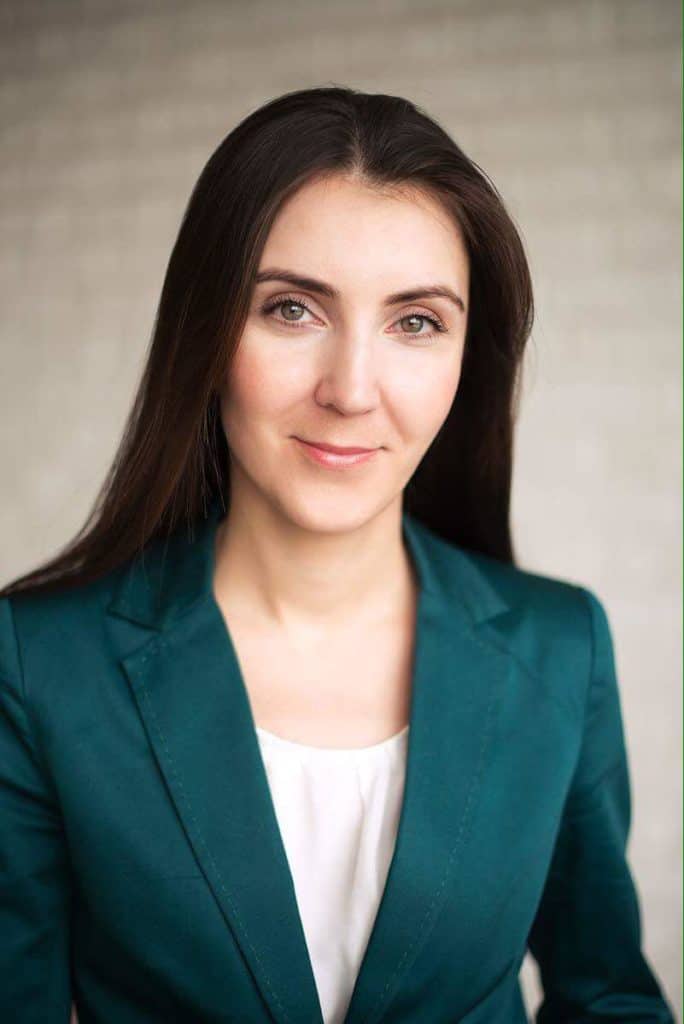
Comment by Iryna Kuzina, an attorney at Barristers JSC, to the online publication "Krapka.club" regarding the shortage of judges in Ukraine.
Why Are Courts Closing in Ukraine?
Ukrainian courts are closing due to a shortage of judges. On average, one in three positions is vacant. In some courts, only one person is handling cases. There are even courts where there are no judges left at all.
With each passing month, the staffing shortage only grows. As a result, child support and divorce cases go unresolved for months, and investigators in the capital are limited in the number of motions they can file per day (such as requests for searches or access to documents).
The number of vacant positions has increased tenfold over the past three years
According to the latest report on the website of the High Qualification Commission of Judges, as of August 27, 2018, 484 local courts are facing a shortage of judges. Of the 4,701 authorized positions, 1,270—or 27 percent—remain vacant. And this figure is constantly rising. For example, at the beginning of January 2018, there were 1,125 vacancies. Since then, another 145 people have left their positions.
But that’s not all. Two years ago, local courts were short by only 245 judges. And a report dated November 9, 2015, states that 105 courts were facing staffing shortages, with a total of 120 judges missing from their authorized staffing levels. That is 10 times (!) fewer than there are now.
What does this mean?
In reality, one-third of the open positions are just “average.” Some courts are doing quite well. For example, at the Ternopil City District Court, only five of the 28 authorized positions are unfilled. But in many districts, for instance, three out of four judges are missing. There are even courts where not a single person is performing their duties! As of August 2018, there were 23 courts that simply had no judges on staff, or those where, instead of three or four staff members, there was only one (who does not preside over cases).
Such courts are simply being shut down. For example, on August 7, 2018, the Yaremcha City Court ceased to administer justice. They say that Judge Andriy Ivanov, who was temporarily seconded there in February 2018, had reached the end of his term. And none of the three judicial positions provided for in the staffing table were ever filled.
“Judge Andriy Ivanov was seconded to us from the occupied territory for six months, and then his secondment was extended. But the law does not allow a seconded judge to work in one place for more than 12 months. So we’re waiting for a judge to be found. And filling the vacancy takes a long time, because the procedure for appointing a judge is inherently lengthy. A new candidate must undergo special training and pass a qualifying exam, after which a competitive selection process is announced. This is not a matter of a single month. For example, if a lawyer has no experience as a judicial assistant, the special training at the National School of Judges lasts nine months. We could also appoint a practicing judge, but they would have to agree to the secondment. Or we’ll have to wait for new judges to be selected from among those appointed to the bench for the first time. But a competition for local courts hasn’t been announced yet,” Galina Savchuk, chief of staff at the Yaremche City Court, told “KRAPTSI.”
For the same reasons, the Mykhailivka (Zaporizhzhia Oblast) and Chornukhy (Poltava Oblast) District Courts ceased administering justice this summer.
The number of pending cases is snowballing
Interestingly, even after closing, the courts continue to accept cases. Only criminal proceedings and urgent motions from investigators (regarding detention or the conduct of searches and forensic examinations) are transferred to other courts. Civil and administrative cases, however—such as divorce cases or DUI cases—remain pending until a judge is appointed.
The Yaremcha Court says it already faced this situation in 2016. Back then, they waited a year for a judge, and by the time he was appointed, more than 800 cases had piled up.
“When the judge arrived, the workload was enormous. He worked day and night. Right now, we have about 400 pending cases, and the number is growing every day,” court staff complain.
Andriy Irkliyenko, a lawyer with the firm “Klimchuk & Partners,” believes that under no circumstances should citizens’ right to a fair trial be violated.
“If a court is closed, citizens can still file a lawsuit by including a reservation. For example, ‘I request that my lawsuit regarding these legal relations be heard in that court, given that this court has been dissolved.’ The court must determine jurisdiction. But in general, I believe that the High Qualification Commission of Judges should hold competitions for judicial positions to at least alleviate the acute shortage of judges,” says Andriy Irkliyenko.
Due to a shortage of judges, investigators are limited in the number of motions they can file
The shortage of judges delays the adjudication of cases and creates serious inconveniences for all parties: attorneys, the prosecution, and investigators.
“In civil cases, the staffing shortage means that you file a lawsuit, but the first court hearing may not take place for half a year. This creates particular difficulties in family cases: people want to get divorced, resolve alimony issues, or divide property, but they have to wait.
There is also a shortage of judges in criminal cases. Because of this, courts in Kyiv have even imposed limits on the number of motions an investigator can file with an investigating judge in a single day. If an investigator needs to conduct numerous searches or obtain temporary access to items and documents, they are forced to wait. The Shevchenkivskyi Court has limited the number of motions for temporary access or expert examinations to five per day. At the Pechersk Court, a line of investigators has formed. The only exception to this limit is when a preventive measure is being selected.
The defense also faces challenges. We file motions with the investigating judge, and the first hearing may be scheduled quickly, but subsequent ones will be in a week or two. The same situation arises in the appellate court when we appeal the rulings of the investigating judges,” Iryna Kuzina, an attorney with the “Barristers” Law Firm, told “KRAPTSI.”
If a court lacks judges, the criminal proceedings may, in essence, be transferred to a court in another district.
“Let’s say there are only two judges left, and they’re hearing a case involving an especially serious crime. In this case, the presiding judge transfers the case to another court through the appellate court. This can be either a good thing (when a court more convenient for the defense and the victims is chosen) or a bad thing (if the person is in custody and the case is dragging on),” Iryna Kuzina explains.
“The shortage is artificially created”
Attorney Rostislav Kravets believes that the shortage of judges in Ukraine has been artificially created.
“The shortage was created by the bodies responsible for forming the judicial branch,” the expert emphasizes. “The High Qualification Commission of Judges and the High Council of Justice do not appoint judges or conduct the necessary exams; instead, they have invented competitions that they themselves are unable to carry out. They fail to review applications for judicial appointments in a timely manner, have invented some sort of qualification assessment, remove undesirable judges from their posts, and limit salaries. In my view, this is not qualification assessment but qualification purging. It is the selection of the most loyal and the elimination of old enemies. Members of the HQCJ and the HJC have already settled scores with their colleagues on numerous occasions.
As a result, judges who have reached retirement age are leaving their jobs en masse (over 90%). Others are resigning because they can’t handle the stress. After all, the workload—which previously was already two to three times the norm—has increased tenfold since the judicial reform. Today, being a judge is not prestigious, but humiliating.”
Other servants of Themis attribute the mass resignations to a simple fear for their lives.
“There is no respect for the courts in society right now. Look at what’s happening in the courts: activists come in—who understand nothing about the judicial process—and pressure us, threaten us, and accuse us of corruption. After all, most of the truly corrupt judges—and those who imprisoned protesters during the Maidan—have already resigned. And it’s the decent ones who are being targeted.
And on the wave of the revolution, many “victims of the regime”—who had actually committed crimes—were released. Take, for example, a person who stole a chocolate bar—but because this was their fifth conviction, they received an eight-year sentence—and another case involving an activist who was released, even though we know for certain that he committed murder. People like that now walk into courtrooms as ‘moral authorities’ and, at the slightest disagreement with us, hint at reprisals,” said one of the judges of the Kyiv Court of Appeals, speaking on condition of anonymity.
Is Being a Judge Prestigious?
At first glance, it might seem that young judges don’t want to work in the regions when they have the opportunity to build a career in regional capitals or Kyiv. But that’s not entirely true, because even in remote areas there are advantages.
For example, in district centers, judges more often deal with land disputes, whereas in large cities such cases are rare. This allows judges to specialize more deeply in a particular area. And the workload in small towns is lighter.
Housing for judges is provided by the territorial offices of the court administration. And if a judge is on assignment, their rent is covered.
Author: Natalia Grigorieva
Source: