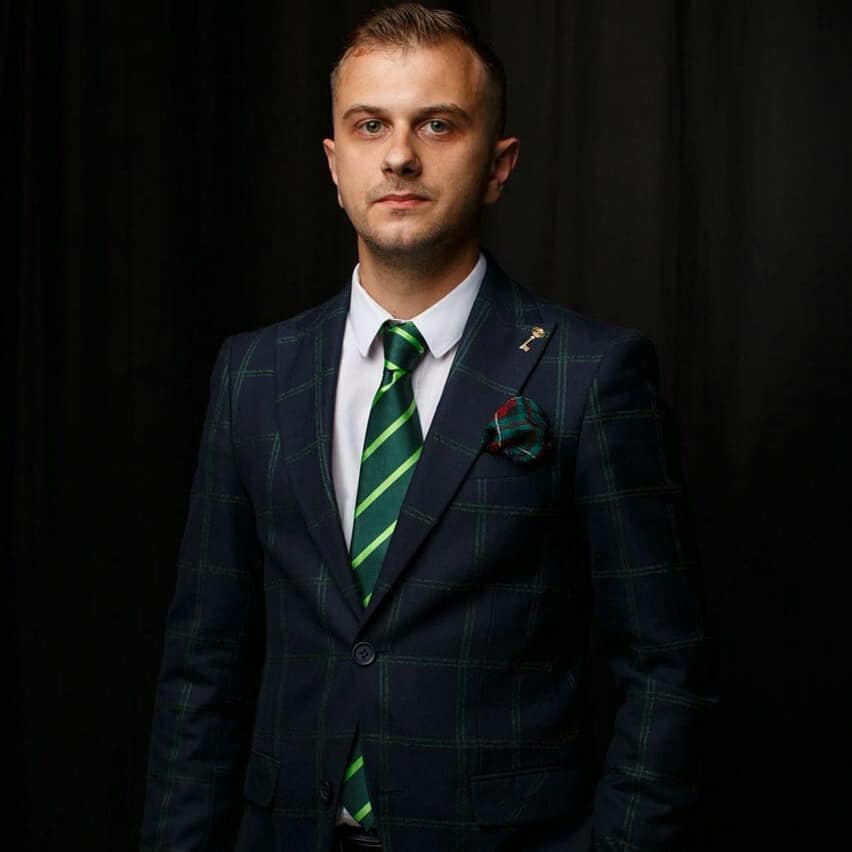
"The Jury System as a Guarantee of a Fair Resolution in Criminal Cases. Or Why Does Ukraine Need a Jury System?" – Oleksandr Shcherbina, Attorney at Law, BARRISTERS Law Firm
The jury system as a guarantee of a fair resolution of criminal cases.
Or Why Does Ukraine Need a Jury Trial?
The principle of the rule of law is based, among other things, on the existence of an independent, impartial, and, most importantly, fair court.
Discussions about amending existing laws and enacting new ones to introduce a jury system into the Ukrainian justice system are being hotly debated not only within the legal community but also among lawmakers.
According to 2016 data, a total of 86,744 people were prosecuted for criminal offenses in Ukraine, of whom 314 were acquitted (representing 0.36% of the total); in 2017, the acquittal rate declined slightly to 0.29%. This raises a number of questions: Is the legal profession in our country truly ineffective? Or, conversely, are the prosecution authorities so effective and professional? Or perhaps the problem lies entirely with the judicial branch? After all, all participants in the process are professional lawyers who graduated from the same universities—with the exception, of course, of the current Prosecutor General.
It is no secret to those involved in activities related to representing clients in court that judges are under a significant workload, which, among other things, affects the quality of the judgments rendered.
Thus, judges—especially those in the first instance—are often guided by their own convictions when making decisions, which in turn leads to an incomplete judicial review and a lack of objectivity in establishing all the circumstances of criminal proceedings. It is also not uncommon for judges to be unwilling to examine the motive behind a crime, claiming that everything is clear enough as it is. The fact that the judicial branch is overburdened—and, as a result, judges’ reluctance to thoroughly examine and analyze witness testimony and the materials of a criminal case—does not always lead to a fair verdict.
Granting a judge the authority to conduct proceedings alone—based on decisions made according to their own convictions and a subjective assessment of the evidence—confer significant power upon them. But what if the defendant in a criminal case openly dislikes the presiding judge, or if the wording of the statute governing the alleged crime is, in the judge’s view, inherently immoral? In such a case, even the prosecution’s examination of the evidence would have negative consequences for the defendant, which in turn would violate the principle of fair trial.
By comparison, in the U.S. and the U.K., the percentage of acquittals is 20 to 60 times higher than in Ukraine—why is that? Is our judicial system truly ineffective, or do we perhaps have a higher number of criminals?
What exactly is a jury trial, and what are its benefits—or drawbacks?
A jury trial is a form of exercising state power—specifically judicial power—directly by citizens through their participation in the administration of justice. The purpose of this form of adjudication is for citizens to make decisions based on their collective subjective convictions.
The American justice system is based on the principle that “the accused has the right to be tried by a jury of peers,” —by “peers,” the U.S. legal system means ordinary citizens who provide the defendant with a safeguard against a corrupt prosecutor and a biased or compromised judge; in such cases, society itself determines the defendant’s fate.
In our country, the procedure for the participation and selection of a jury is provided for in Chapter 30 of the Criminal Procedure Code of Ukraine and is, in essence, highly arbitrary. Despite the formalistic nature of jury participation in the administration of justice, on March 22, 2018, a jury presided over by Judge S.V. Gudkov V.M. Datsenko, and jurors V.I. Syomak, O.M. Sahl, and O.M. Molotova, an acquittal was handed down regarding charges against an individual for committing criminal offenses under Part 3 of Article 15, subparagraphs 3 and 12 of Part 2 of Article 115, Part 2 of Article 146, and Part 2 of Article 189 of the Criminal Code of Ukraine; the individual was acquitted of committing a particularly grave crime, and it was established that the individuals had been provoked by SBU officers.
Dear readers, it is up to you to decide whether you trust our judicial system and whether we are ready for radical changes for the sake of a better future.

Oleksandr Shcherbyna , ATTORNEY, Partner at BARRISTERS Law Firm
Author: Oleksandr Shcherbina
Source: